West Izu feels different from the moment the peninsula turns away from the busier east coast. The roads become more scenic, the coastline becomes more dramatic, and the pace begins to slow. In Nishiizu, cliffs, coves, small fishing communities and open views across Suruga Bay create a destination that feels removed from Tokyo even though it is still practical for a short escape.
That combination is the reason Nishiizu works best as more than a list of attractions. You can spend the morning inside a sea cave, the afternoon swimming or walking along the coast, the evening watching the horizon turn gold, and the night in a hot-spring stay with seafood for dinner. The experience is active when you want it to be and quiet when you do not.
Why visit West Izu instead of staying on the east coast?
The east side of the Izu Peninsula is easier to reach by direct rail and has famous resort towns such as Atami and Ito. West Izu asks for a little more travel time. In return, you get a more indented coastline, smaller communities, fewer large urban resort zones and a stronger sense that the landscape is the destination.
Nishiizu is especially compelling for travelers who want four things in the same trip: natural beauty, light outdoor activity, local culture and food, and genuine downtime. That mix also makes it a strong alternative to a tightly scheduled Japan itinerary. You do not need to race from attraction to attraction for the trip to feel full.
The best things to do in Nishiizu
1. Start with Dogashima and Tensodo Cave
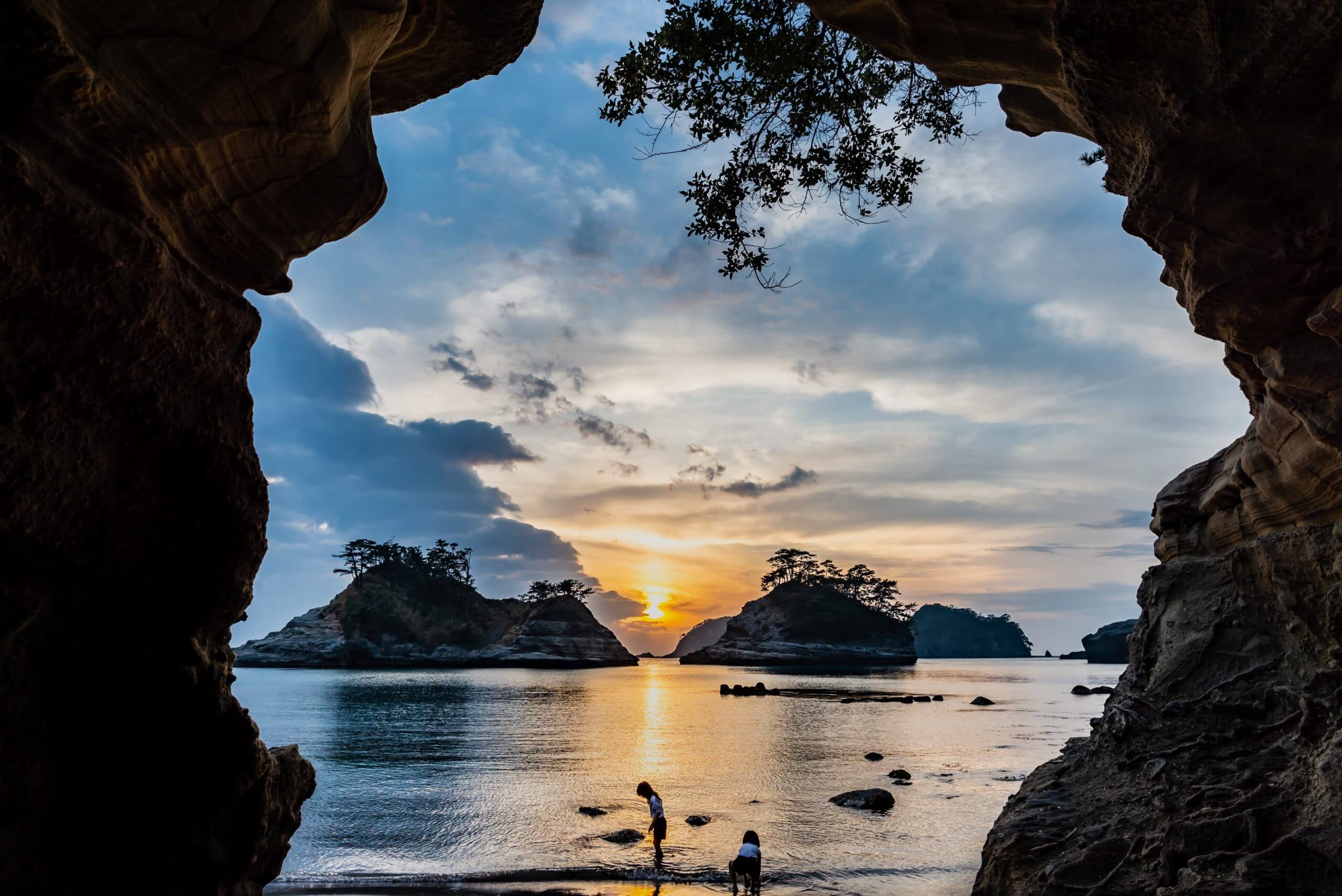
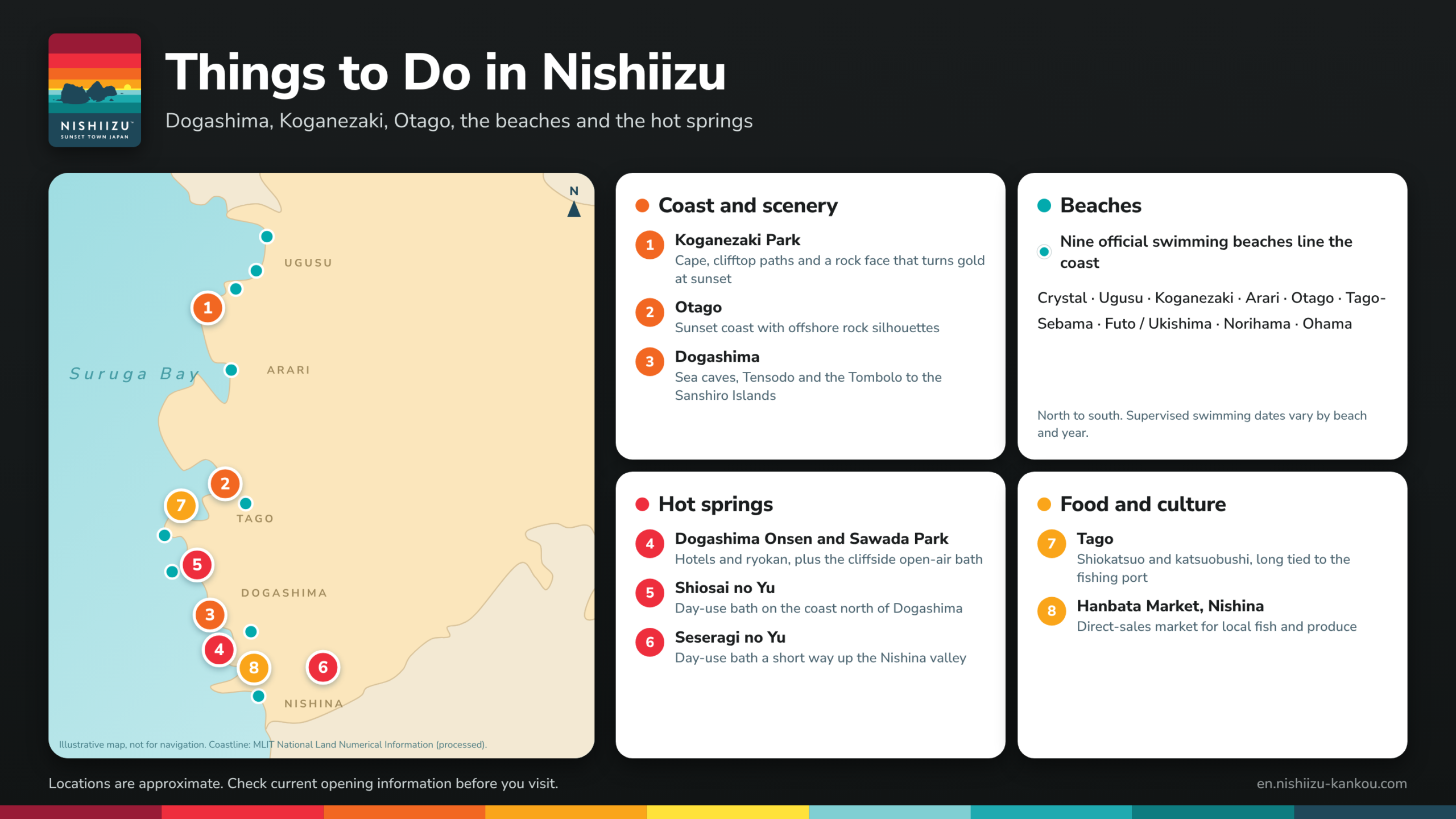
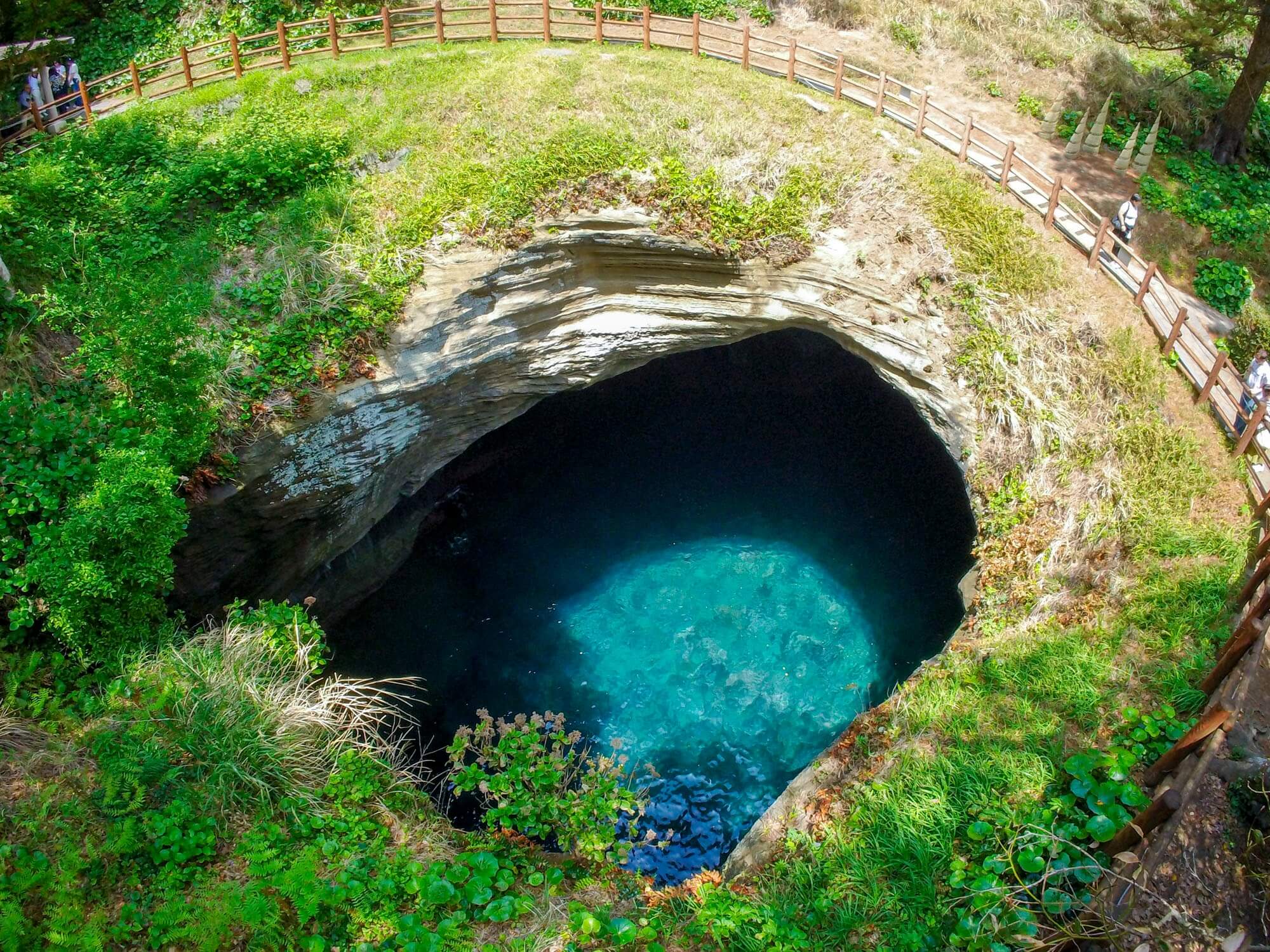
Dogashima is the signature scenic area of Nishiizu. The coast was shaped by volcanic activity and erosion, leaving layered cliffs, small islands and sea caves. The best-known experience is the sightseeing boat into Tensodo Cave, where daylight enters through a natural opening in the ceiling. The standard cave excursion is short enough to fit easily into a half-day visit, but sea conditions can stop operations, so same-day checking matters.
2. See the Dogashima Tombolo at low tide
Near Dogashima, the Sanshiro Islands are connected to the mainland by a natural land bridge when the tide drops far enough. This is the Tombolo. The crossing is condition-dependent, which is exactly what makes it memorable: the route appears and disappears with the sea. Treat the official tide information as essential trip planning, not as a suggestion.
3. Choose a beach that fits the way you travel
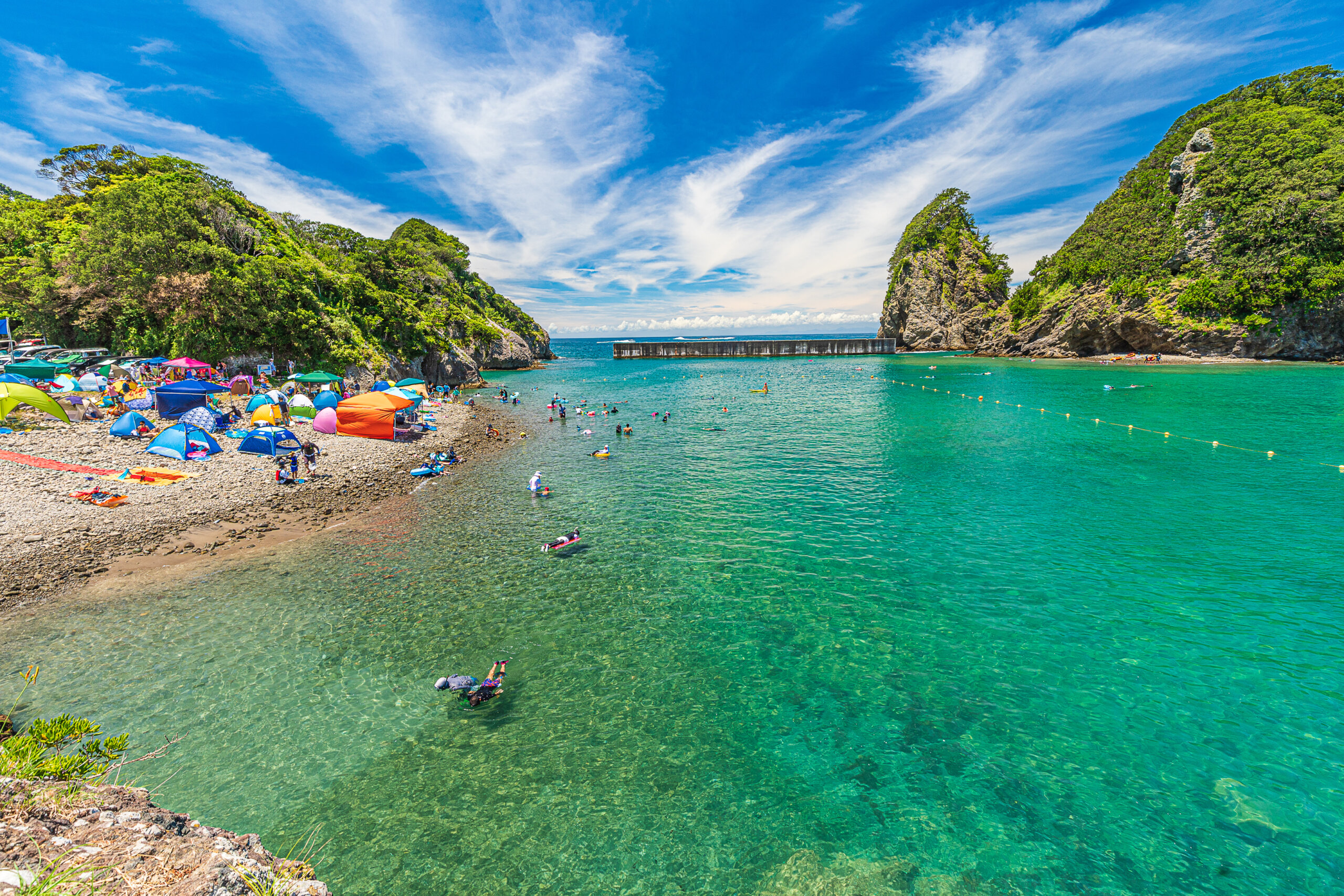
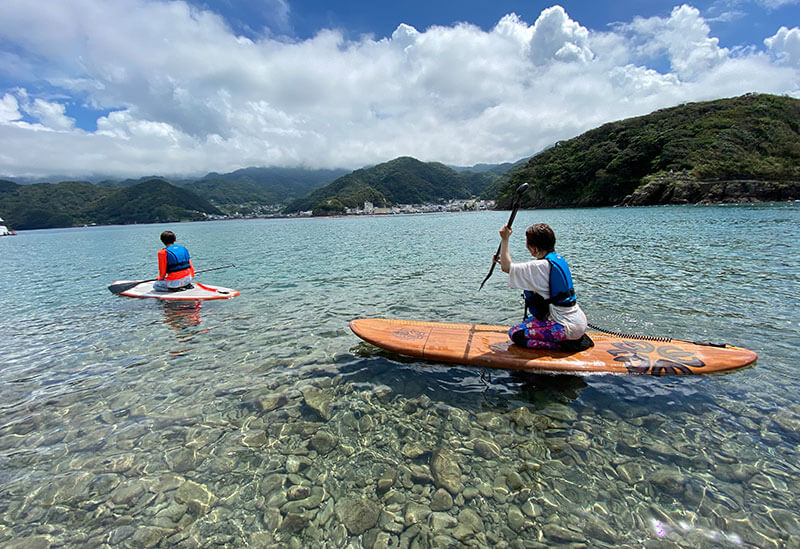
Nishiizu has nine official swimming beaches, and they are not interchangeable. Crystal Beach has a long, shallow shoreline and a campground nearby. Koganezaki is a small stone beach known for clear water and snorkeling/diving. Tago-Sebama and Futo are clear-water coves that reward travelers who care more about marine life and scenery than a wide sandy beach. Norihama is a calm inner beach with Dogashima rock formations in view, while Ohama is the largest beach in the town and suits more active marine use.
4. Build one evening around the sunset
The west-facing coast is one of Nishiizu’s defining advantages. Otago Beach, Dogashima and Koganezaki each frame the sunset differently: Otago uses offshore rock silhouettes, Dogashima layers islands and cliffs across the horizon, and Koganezaki is known for rock faces that turn golden in the late light. Do not treat sunset as what happens after sightseeing. In Nishiizu, it is one of the main events.
5. Soak in an onsen that faces the sea
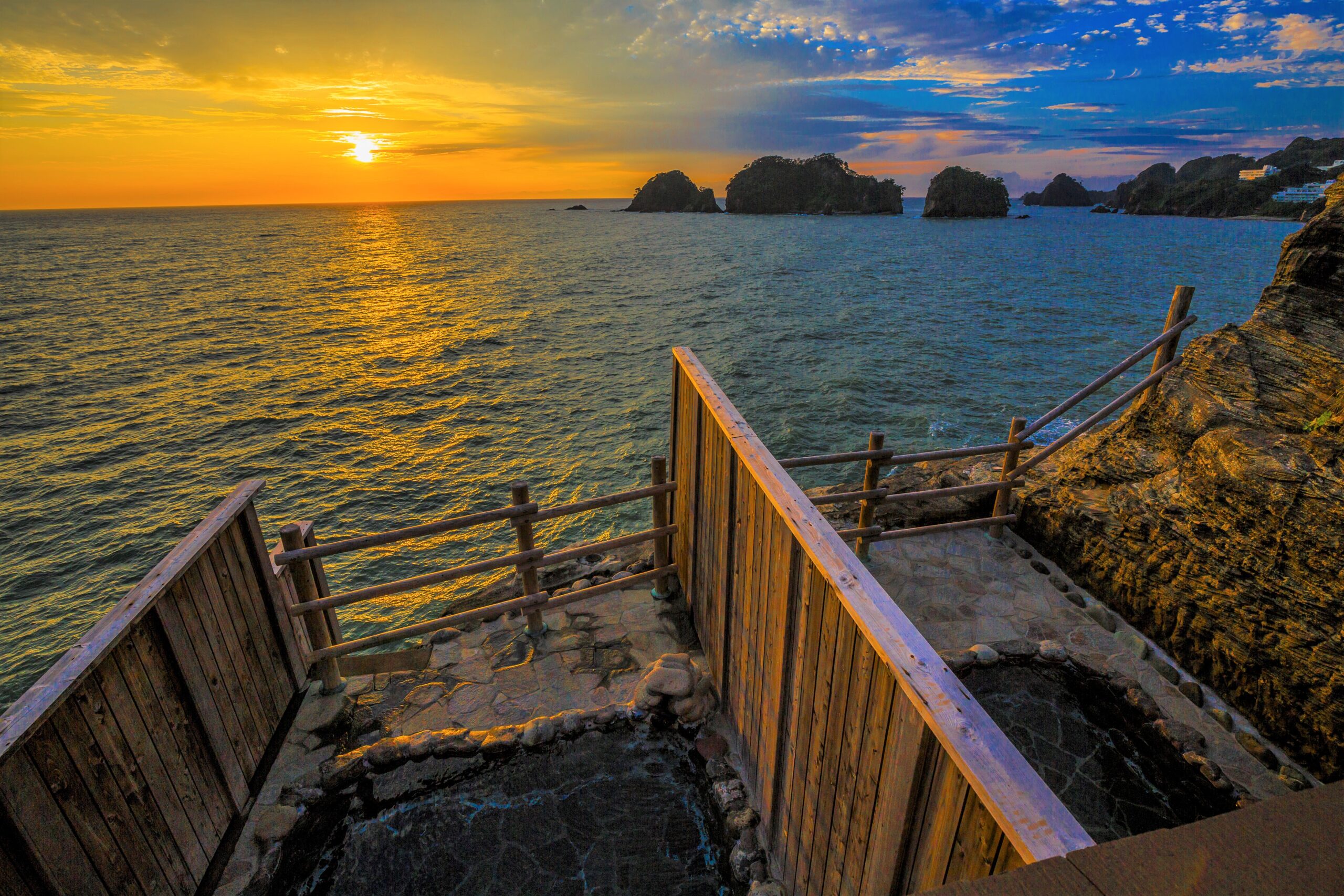
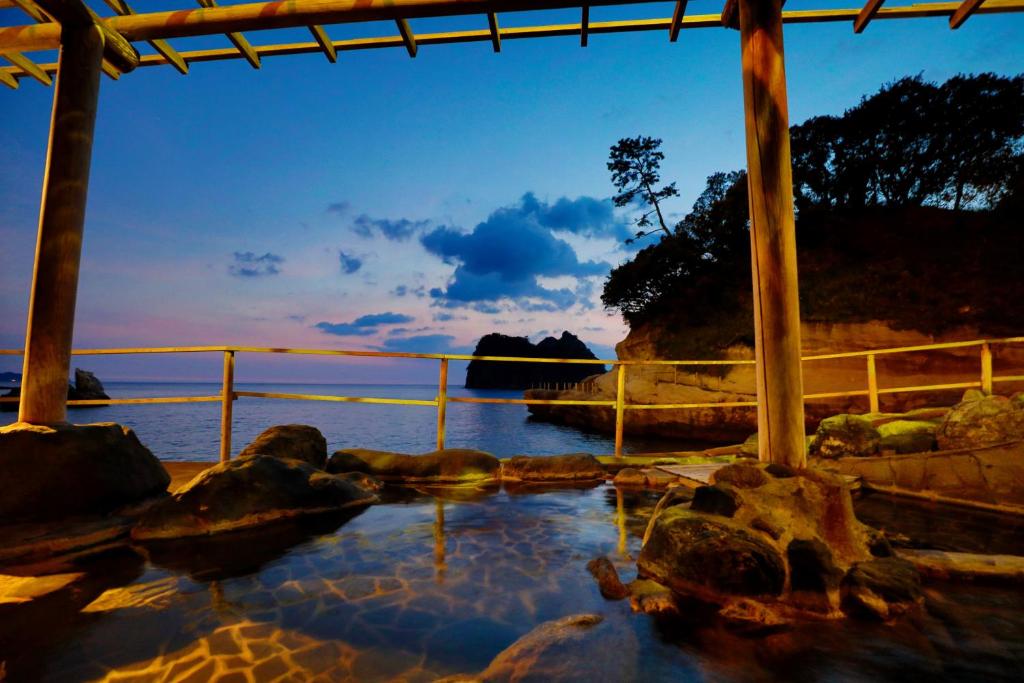
Hot springs turn the scenery into a slower experience. Dogashima has a concentration of hot-spring accommodation, and the municipal Sawada Park Open-Air Bath is one of the clearest examples of what makes West Izu different: the bath sits on a cliff facing Suruga Bay. If your priority is rest, an ocean-view ryokan can become the center of the itinerary rather than simply the place where you sleep.
6. Eat the coast, then learn the story behind it
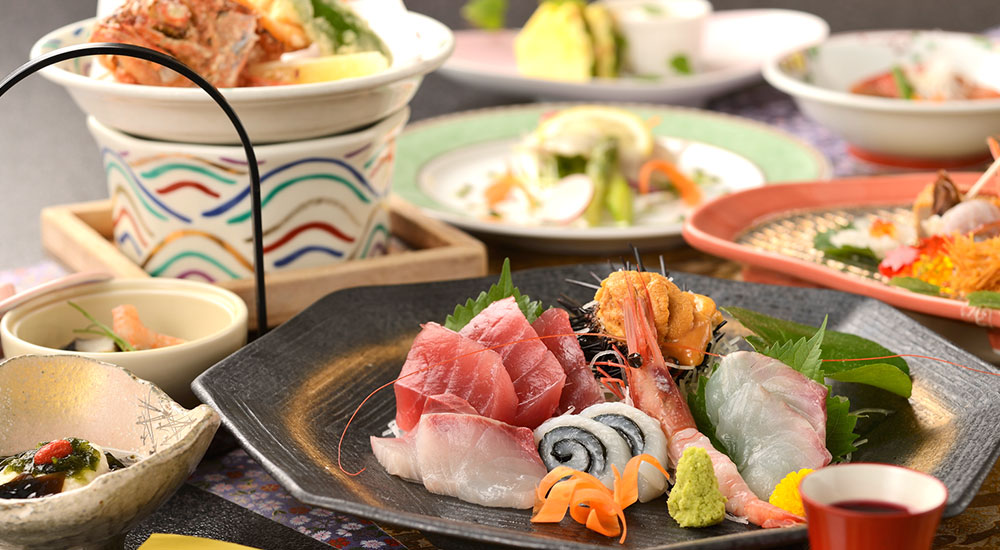
Fresh seafood is the obvious starting point, but Nishiizu becomes more interesting when you move beyond sashimi. In the Tago district, shiokatsuo — salted and dried bonito — survives as a traditional preserved food and New Year offering. The area also has a long katsuobushi tradition, while local tengusa seaweed connects the coast to tokoroten. These foods make the destination feel specific. They belong to this coastline and its working history.
How many days do you need in Nishiizu?
Two days is the minimum that feels satisfying. One overnight gives you enough time for Dogashima, a sunset, an onsen stay and one additional activity. Three days is better if you want the beach or water activities to feel relaxed, or if you are traveling without a car.
| Trip length | Trip length | Realistic shape |
|---|---|---|
| 1 day | People already staying elsewhere in Izu | Dogashima + one nearby stop + sunset if transport allows |
| 2 days / 1 night | First-time weekend trip | Dogashima + sunset + onsen + beach/food/culture |
| 3 days / 2 nights | Slow travel, families, international visitors | Add water activity, longer beach time, food/craft experience or more flexible weather planning |
Best time to visit West Izu
There is no single best month because the strongest reason to visit changes with the season. Summer is the clearest choice for supervised swimming, snorkeling and camping. Spring and autumn are easier for walking, photography and outdoor exploration without peak summer heat. Winter is quieter and works especially well for hot springs, seafood, clear-air views and sunset-focused trips.
For the Tombolo and marine activities, conditions matter more than the calendar alone. Tide level, waves, wind and seasonal operating dates can change what is possible. Build the trip around one or two priorities, then leave room for a second option.
How to get to Nishiizu from Tokyo
The most common public-transport route is Tokyo to Mishima by Tokaido Shinkansen, Mishima to Shuzenji by the Izu Hakone Railway, then Tokai Bus toward Nishiizu and Dogashima. Nishiizu Town lists about one hour from Tokyo to Mishima, about 30 minutes from Mishima to Shuzenji and roughly 75 minutes from Shuzenji to Nishiizu. In practice, transfer time means you should think of Nishiizu as a roughly half-day travel commitment rather than a quick suburban hop.
A car is the easiest way to combine beaches, viewpoints and smaller coastal stops. Nishiizu Town lists roughly one hour from Tokyo I.C. to Numazu I.C. and about 90 minutes from Numazu I.C. to Nishiizu, before traffic and stops. If you drive, the journey becomes part of the trip because the west-coast route opens up viewpoints and spontaneous stops that are difficult by bus.
Where should you stay?
For a first trip, Dogashima is the most practical scenic base because it keeps the cave cruise, Tombolo area, Norihama, sunset views and hot-spring accommodation close together. Travelers who care most about beaches may prefer to stay farther north or near the beach they plan to use. Travelers who want a deeper local-food experience can look toward Tago and nearby coastal communities.
Choose the stay according to the experience you want at 5:30 p.m., not only according to the room. If sunset and onsen are priorities, verify the orientation of the bath and room. If food is the priority, check the meal plan. If you are without a car, check the nearest bus stop and whether the property offers pickup.
A simple first-time West Izu trip
Day one: travel to Nishiizu, spend the afternoon around Dogashima, take the cave cruise if it is operating, then check in early enough to enjoy sunset and an onsen before dinner. Day two: choose one slower experience — a beach, Koganezaki, a local food stop, a glass workshop or a short coastal walk — then return toward Mishima without trying to squeeze in the entire peninsula.
That is the central idea of Nishiizu: do enough to feel discovery, but leave enough space to actually experience the place.
Bottom line
West Izu is worth the extra travel time when you want a Japan trip that feels coastal, unhurried and visually distinctive. Nishiizu combines its strongest assets unusually well: Dogashima's volcanic coast, nine beaches, sunset viewpoints, onsen, seafood and local traditions all sit close enough to become one coherent two- or three-day escape.