The best beach in West Izu depends on what you actually want to do. A family looking for shallow water needs a different beach from a confident snorkeler. A traveler who wants sunset photos may care less about a changing room. A camper may want to be able to walk from the tent to the sea.
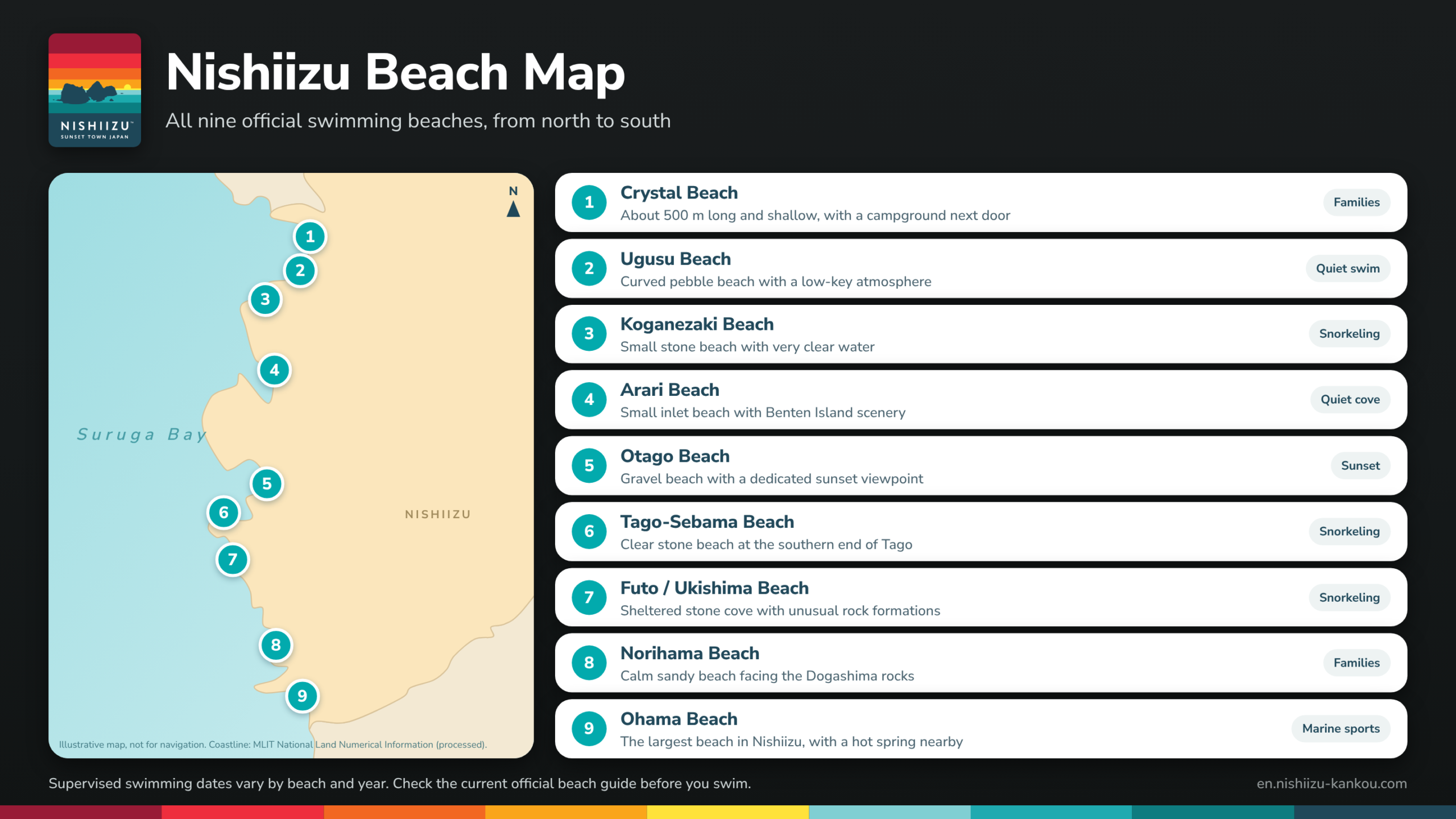
Nishiizu makes that choice unusually interesting because the town has nine official swimming beaches. Some are sandy, some are stone or gravel, some sit inside calm coves, and some open onto larger water. Instead of declaring one winner, use the coastline as a menu.
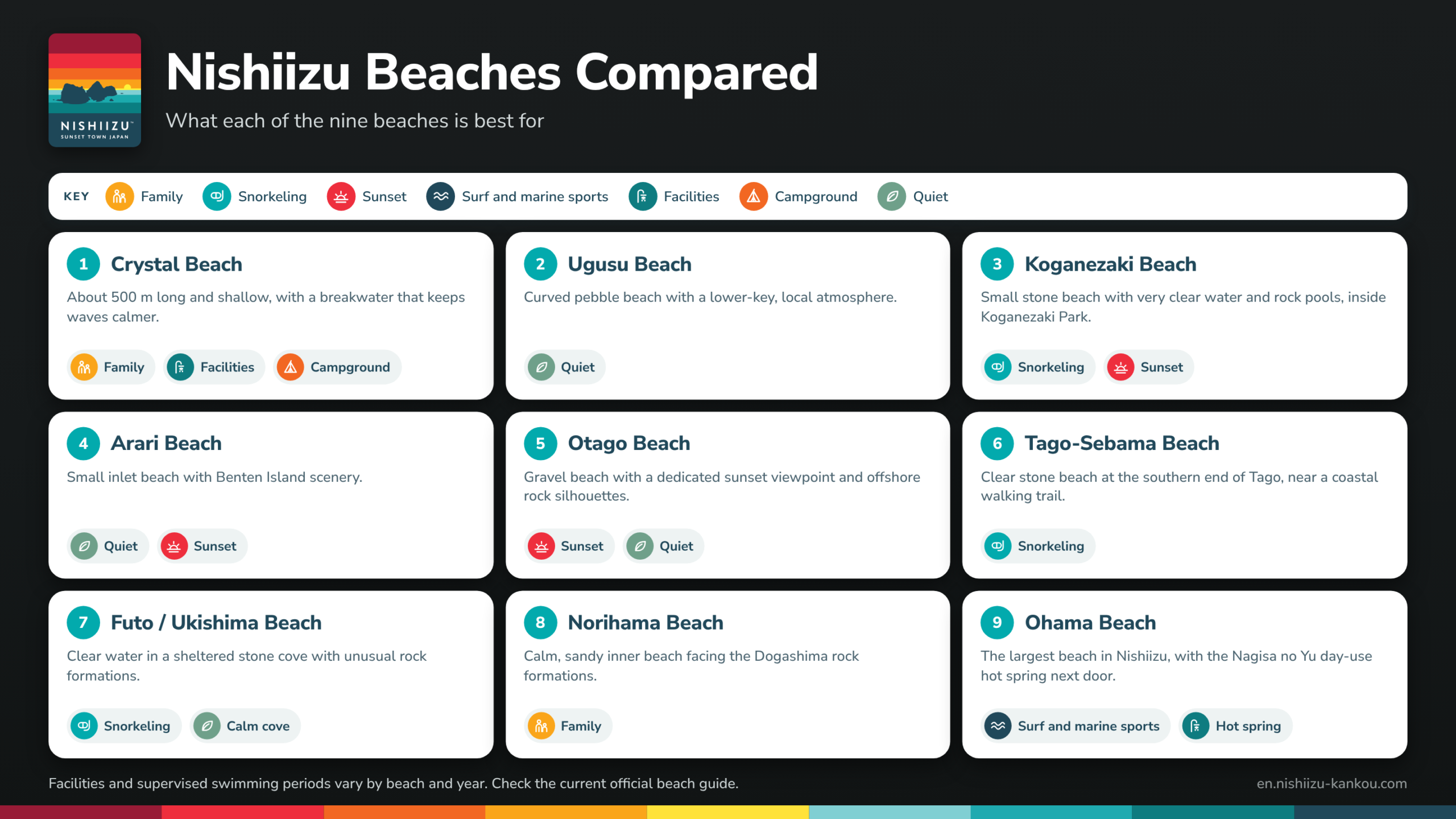
Nishiizu’s 9 beaches at a glance
| Beach | Best for | What stands out |
|---|---|---|
| Crystal Beach (Fukada) | Families, easy beach day, camping | About 500 m, shallow water, breakwater helps keep waves calmer; campground nearby |
| Ugusu Beach | Quiet swimming | Curved pebble beach; lower-key atmosphere |
| Koganezaki Beach | Snorkeling, diving, rock-pool exploration | Small stone beach with very clear water inside Koganezaki Park |
| Arari Beach | Quiet coves, sunset | Small inlet beach with Benten Island scenery and sunset potential |
| Otago Beach | Sunset, photography, quiet shore | Gravelly beach with a dedicated sunset viewpoint; more scenery-led than resort-like |
| Tago-Sebama Beach | Snorkeling, clear water, walkers | Clear stone beach at the southern end of Tago; connected toward the Tomyozaki trail |
| Futo / Ukishima Beach | Snorkeling, calm cove, geology | Clear water in a sheltered stone cove with unusual geosite rock formations |
| Norihama Beach | Families, Dogashima scenery | Calm inner sandy beach facing Dogashima rock formations |
| Ohama Beach | Space, surfing and marine sports | Largest beach in Nishiizu; day-use Nagisa no Yu hot spring nearby |
Best overall beach for families: Crystal Beach
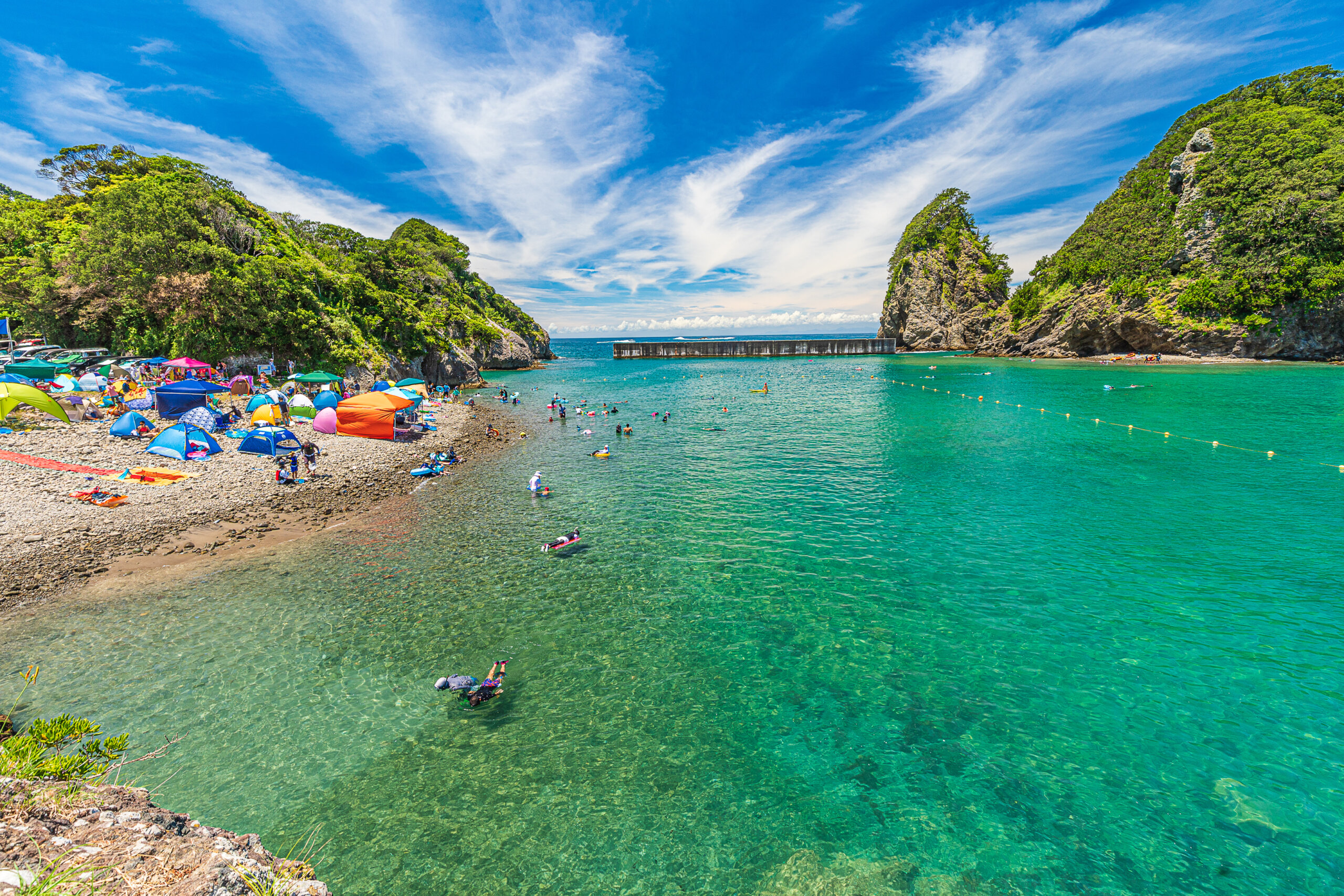
Crystal Beach is the easiest all-round recommendation for families who want a more conventional beach day. The official 2026 guide describes a roughly 500-meter shallow beach, with a breakwater that helps keep the waves gentler. Toilets, showers, changing facilities and parking are available during the supervised season, and the campground next door makes it particularly useful for an overnight outdoor trip.
No beach is automatically safe because conditions change, but Crystal’s physical layout and facilities make it one of the most straightforward choices for parents who value simplicity.
Best for clear-water snorkeling: Koganezaki, Tago-Sebama and Futo
If the water matters more than the sand, start with Koganezaki, Tago-Sebama and Futo. Koganezaki is a small stone beach inside the park and is officially described as having high transparency, with rock-pool play, diving and snorkeling all common. Tago-Sebama is another clear stone beach, while Futo sits in a cove with calm conditions and unusual coastal formations.
Snorkeling conditions can change daily. Visibility, wind, swell and currents matter more than a general reputation. Use designated swimming areas and follow lifeguard or local operator guidance during the official season.
Best beach near Dogashima: Norihama
Norihama is one of the most useful beaches for a first-time visitor because it pairs swimming with the scenery people came to Dogashima to see. It sits on the opposite side of Dogashima Park, in calmer inner water, with the offshore rock formations in view.
That makes it easy to build a day that combines the cave cruise in the morning and beach time in the afternoon without moving far. It is also a practical choice for travelers without a car if their accommodation is around Dogashima.
Best for sunset: Otago Beach
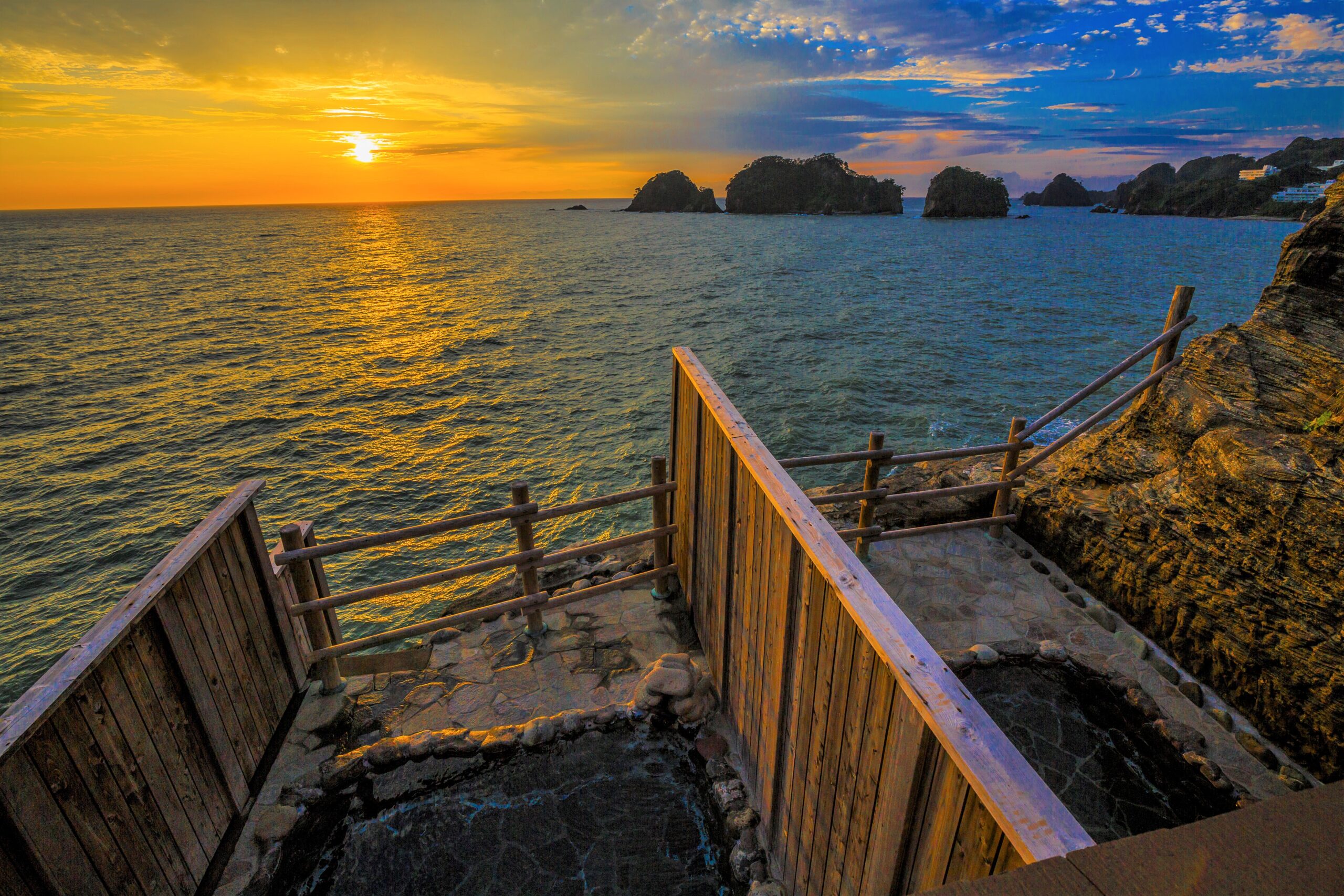
Otago is better known for sunset than for a classic resort-beach setup, and that is exactly why it belongs in this comparison. The town’s official sunset material identifies Otago as one of Nishiizu’s major sunset points, and B-Izu highlights the rock formation known locally as Meganeccho or “Godzilla Rock” as a sunset photography subject.
Choose Otago when the goal is to stay by the water through late afternoon and let the beach become a viewpoint rather than an activity base.
Best for more active water use: Ohama
Ohama is the largest swimming beach in Nishiizu and is associated with surfing and other marine sports. It is also one of the easiest beaches to combine with hot springs because the day-use bath Nagisa no Yu is adjacent. That pairing — active water followed by a bath — is very Nishiizu.
Best for a quieter beach: Ugusu or Arari
Ugusu is a curved pebble beach described in the current official guide as something of a hidden option. Arari is a small cove beach with sunset and Benten Island scenery. Neither needs to compete with the big-name beaches; their strength is that they feel more local and less like a destination engineered around crowds.
When is beach season in Nishiizu?
The supervised swimming season is concentrated in summer, but opening dates vary by beach. In 2026, several Nishiizu beaches opened from July 18 through August 23, while others used an August 1–23 period. Those dates change by year. For an evergreen article, keep the comparison itself permanent and link to the official current-season beach page for dates, lifeguard hours, parking charges and facility changes.
How to choose the right beach
| If you want… | Start with… | Then consider… |
|---|---|---|
| A simple family beach day | Crystal Beach | Norihama |
| Snorkeling / clear water | Koganezaki | Tago-Sebama or Futo |
| Dogashima + beach in one day | Norihama | Futo |
| Sunset photography | Otago | Arari or Koganezaki |
| Camping + beach | Crystal Beach | Other camp-linked options when operating |
| More space / marine sports | Ohama | Check daily conditions and local rules |
Do you need a car for Nishiizu beaches?
A car makes beach-hopping much easier. Bus travel can work for a single destination, especially around Dogashima, but it is inefficient for comparing multiple small coves in one day. If you are traveling without a car, choose the beach based on your accommodation and bus route rather than trying to visit three beaches.
What to bring
- Water shoes for stone beaches and rocky entries.
- Reef-safe sun protection and plenty of drinking water.
- Snorkel gear only where conditions and local rules make it appropriate.
- A dry bag for phones and valuables.
- Cash or alternative payment because smaller facilities can vary.
- A backup plan: onsen, food or Dogashima if wind or waves change the beach day.
Bottom line
The strongest reason to choose Nishiizu for a beach trip is not that it has one famous beach. It is that nine very different beaches sit along the same dramatic coast. Pick the beach according to your purpose, then build the rest of the day around nearby scenery, food, sunset or hot springs.
Read more articles:
Complete Dogashima travel guide