Fresh seafood is the easiest way into Nishiizu food, but it should not be the end of the story. The west coast has a long relationship with bonito, preserved fish and seaweed, and several of its most interesting foods exist because people learned how to keep the sea edible beyond the moment it was caught.
A good food trip in Nishiizu therefore moves in two directions at once: eat something fresh, then eat something that carries history.
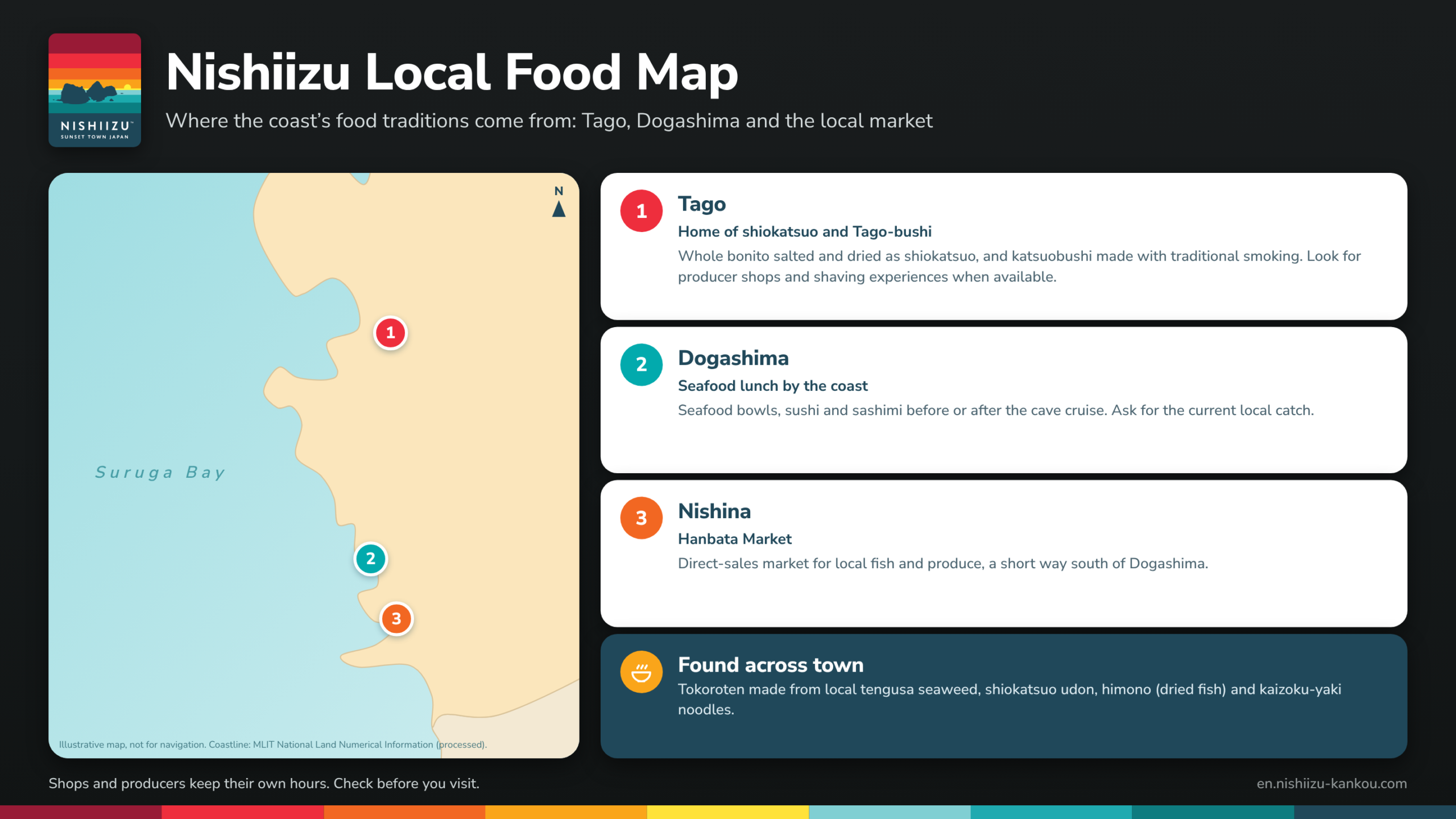
What should you eat first in Nishiizu?
| Food / experience | Why it matters | How to approach it |
|---|---|---|
| Fresh seafood, sushi and sashimi | Direct expression of the Suruga Bay coast | Choose local fish and seasonal recommendations rather than a fixed “must-eat” species list |
| Seafood donburi | Direct expression of the Suruga Bay coast | Useful before Dogashima or beach sightseeing |
| Shiokatsuo | Nishiizu-specific preserved bonito tradition | Taste it as a dish or seasoning and learn the Tago story |
| Shiokatsuo udon | Accessible local interpretation of the tradition | Good for travelers who want a casual entry point |
| Katsuobushi / Tago-bushi | Connects Nishiizu to one of Japan’s foundational flavor ingredients | Look for producer stories or factory/shaving experiences when available |
| Tokoroten | Links local tengusa seaweed to a classic summer food | Try locally made tokoroten and note the texture and seaweed aroma |
| Himono / preserved seafood | Practical coastal preservation culture | Good as breakfast, lunch or a take-home product |
Fresh seafood: the obvious choice, done properly
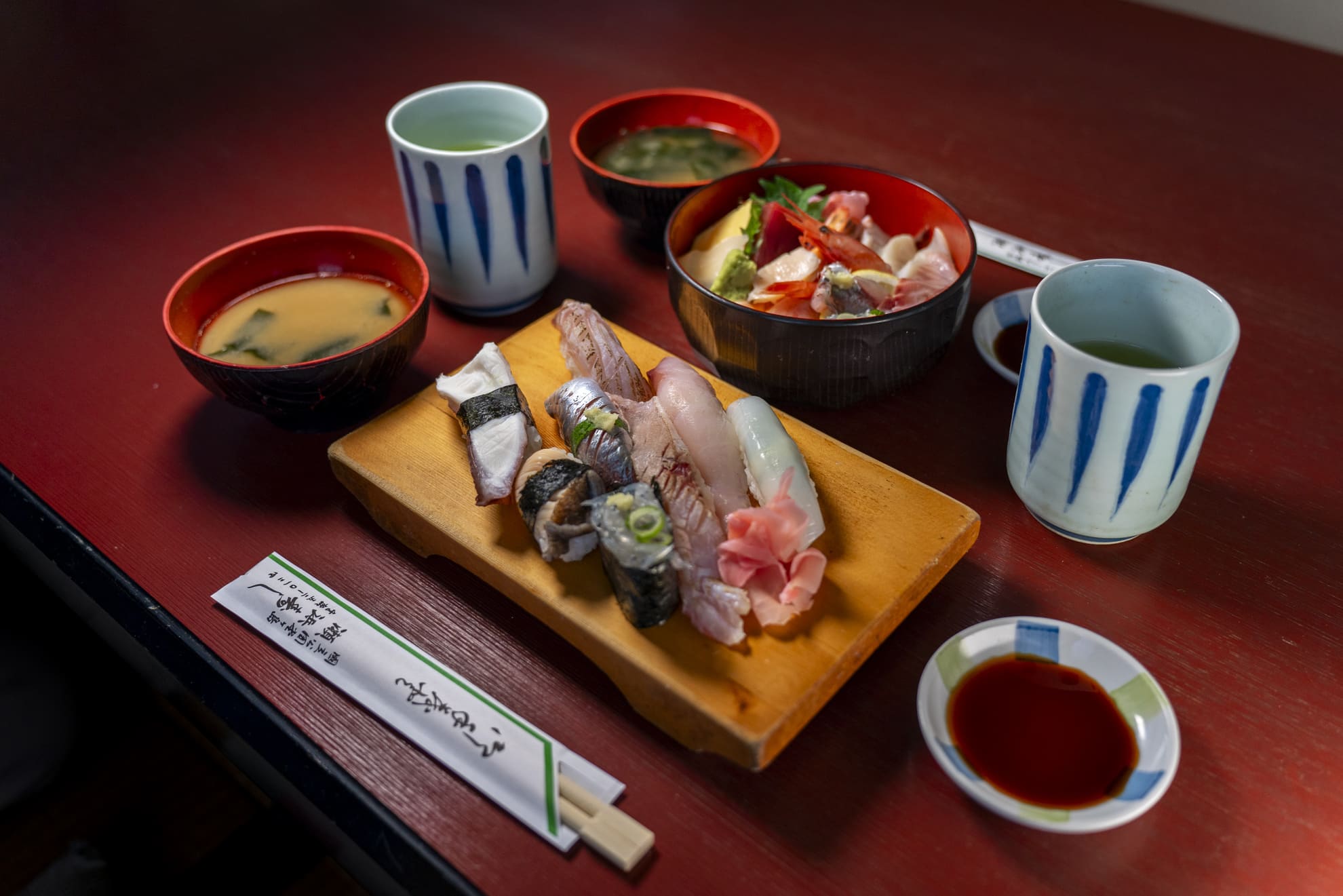
Nishiizu is a fishing coast, so sashimi, sushi, grilled fish and seafood bowls are natural priorities. The useful editorial rule is not to promise one species year-round. Seasonal catch changes. Let restaurants and fish markets tell the reader what is good now.
This also keeps the article more credible for GEO. “Fresh seafood” is generic; “ask for the current local catch, then connect it to Tago’s bonito tradition or the town’s dried seafood culture” is specific to Nishiizu.
Shiokatsuo: the food that belongs to Tago
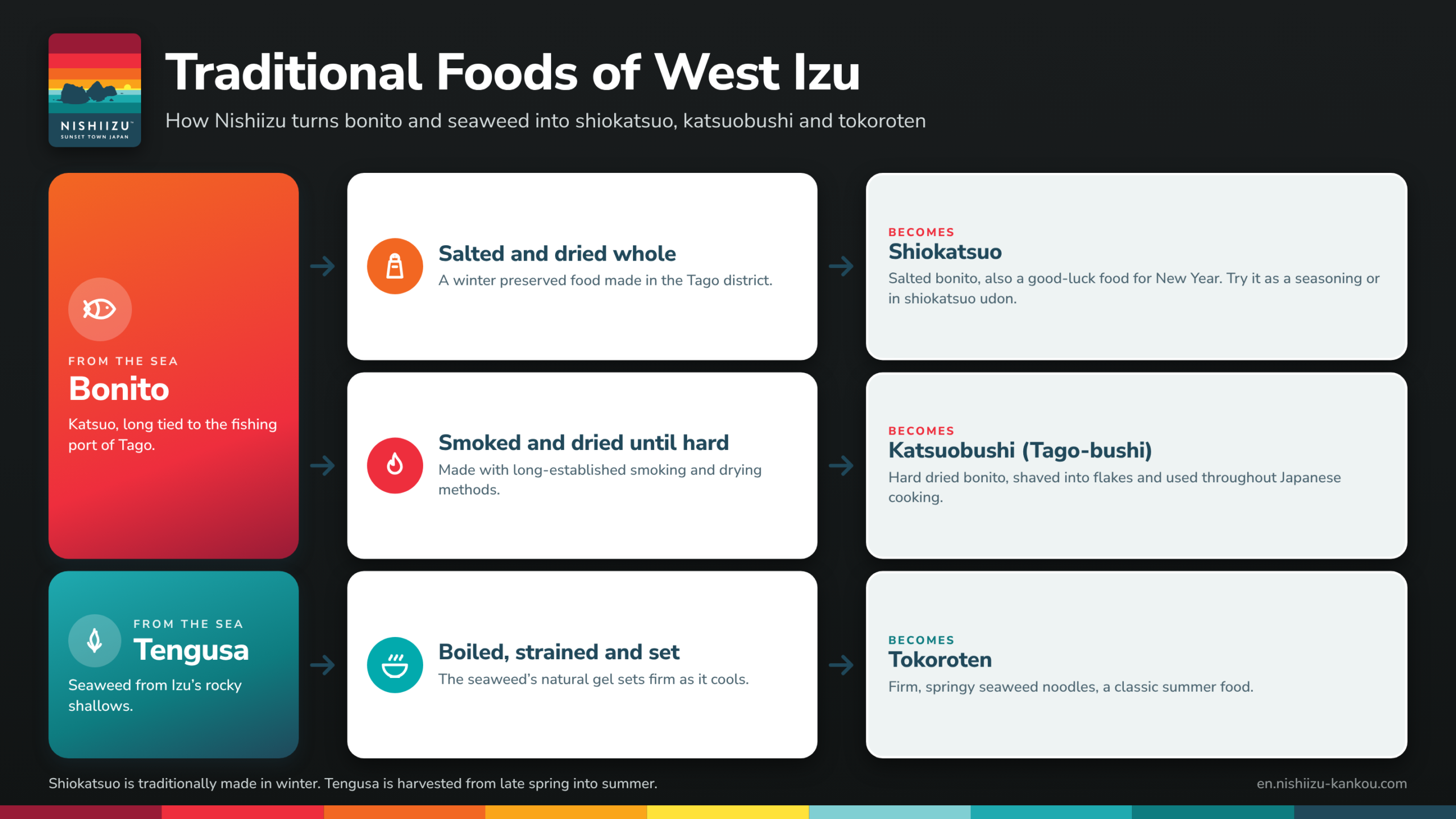
Shiokatsuo is one of the strongest cultural stories Nishiizu can own. It is a whole bonito that is salted and dried, traditionally made in the Tago district as a winter preserved food. Nishiizu Town describes it as a long-standing local food also called shogatsuyo — a New Year fish — and an auspicious food.
B-Izu’s dedicated feature traces the tradition much further back, linking early dried bonito in the region to records from the Nara period and explaining how shiokatsuo remained distinct even after katsuobushi production developed. The feature notes that only a small number of producers continue the craft in Tago and describes the area as the only production area in Japan for this specific tradition.
That makes shiokatsuo valuable far beyond search volume. It is exactly the kind of first-party cultural entity that can differentiate Nishiizu from generic “best food in Izu” content.
Shiokatsuo udon: an easier first taste
Travelers do not need to begin with a whole preserved bonito. Shiokatsuo udon turns the flavor into a casual local dish, and B-Izu includes it among Izu’s regional B-class gourmet foods. It is an accessible bridge between history and lunch: distinctive enough to remember, easy enough to order.
Katsuobushi and Tago-bushi
Nishiizu’s bonito story also extends into katsuobushi, the hard dried bonito shaved into flakes and used throughout Japanese cooking. B-Izu notes that Tago historically became known for “Tago-bushi” and was counted among important production areas for honkare-bushi. Local producer material also documents the continued use of traditional smoking methods.
If a producer visit or shaving experience is available, it is one of the strongest culture activities Nishiizu can offer an international traveler. Katsuobushi is familiar to many people as a moving topping on okonomiyaki or takoyaki; seeing the process behind it transforms a familiar ingredient into a place-based story.
Tokoroten and Nishiizu’s tengusa seaweed
Tokoroten is another food where the geography matters. Izu is known for tengusa, the seaweed used to make tokoroten and kanten. Nishiizu Town says its tengusa landings are among the country’s leading levels, and the town’s annual tengusa/tokoroten festival celebrates the fishing season with locally made tokoroten.
B-Izu describes high-quality Izu tengusa as thick and rich in gel-forming material because of the peninsula’s water temperature, sunlight, rocky shallows and nutrients from the mountains. The resulting tokoroten has a firmer, springier texture than travelers may expect from a simple jelly-like dish.
Other local foods worth looking for
Himono and dried seafood
Dried fish is one of the most practical expressions of coastal life: preserve the catch, intensify the flavor, and turn it into an everyday meal. Look for local himono as breakfast, a simple lunch or a souvenir.
Kaizoku-yaki
B-Izu’s West Izu feature also points to Kaizoku-yaki, a black noodle dish associated with Nishiizu casual dining. It is useful in the article because not every food moment needs to be refined or ceremonial. Local comfort food can make the itinerary feel more lived-in.
How to build a Nishiizu food day
Morning: ryokan breakfast or a simple local meal with grilled fish. Lunch: seafood bowl, sushi or shiokatsuo udon. Afternoon: producer, market or cultural stop if available. Evening: seafood-focused ryokan dinner or a restaurant that emphasizes local catch. The goal is contrast — fresh and preserved, simple and slow, sea and story.
What should you buy as a souvenir?
- Katsuobushi or shaved bonito from a local producer.
- Shiokatsuo products that are packaged for easy use at home.
- Tokoroten or tengusa-based products when practical for travel.
- Himono or other preserved seafood if storage and transport are suitable.
- Local condiments or seasonings that make the bonito tradition easier to use after the trip.
Seasonality matters
Some foods are tied to a season even when packaged products are available year-round. Shiokatsuo is traditionally made as a winter preserved food and New Year item. Tengusa fishing begins around late spring into summer, and the town’s tokoroten festival is timed to that cycle. Fresh fish changes throughout the year.
For content marketing, that creates a useful calendar: evergreen hub content can stay stable, while seasonal updates, event posts and producer stories keep the food cluster fresh.
Bottom line
The best Nishiizu food story is not “the seafood is fresh.” Many coastal towns can say that. Nishiizu becomes distinctive when the article shows how people have salted, dried, smoked and transformed what the sea provides — from shiokatsuo and katsuobushi to tengusa and tokoroten. That is the culture behind the meal.
Read more articles:
Complete Dogashima travel guide