Sunset is not decorative in Nishiizu. It is one of the destination’s clearest competitive advantages. The west coast faces Suruga Bay, and the shoreline is full of islands, volcanic rock and fishing-harbor silhouettes that give the setting sun something to interact with.
Nishiizu Town has formally built part of its identity around the sunset. Its official tourism material highlights Otago, Dogashima and Koganezaki as major viewing points and links to an annual sunset timetable. The town also made a “Japan’s No. 1 sunset” declaration in 2005, while Otago is recognized among Japan’s notable sunset locations.
Best West Izu sunset spots at a glance
| Spot | Best for | Signature visual |
|---|---|---|
| Otago Beach | Photography, couples, dedicated sunset outing | Sun dropping around offshore rocks, including Meganeccho / “Godzilla Rock” |
| Dogashima | First-time visitors, scenery + sunset in one day | Layered islands and cliffs becoming silhouettes |
| Koganezaki | Golden rock, landscape photography, clear-day Fuji possibility | Cape rock face glowing gold in low light |
| Arari Harbor | Quieter local atmosphere | Fishing boats and harbor shapes against the sky |
| Sawada Park Open-Air Bath | Sunset + onsen | Suruga Bay viewed directly from a cliffside bath |


1. Otago Beach: the sunset-first choice
Otago is the place to choose when sunset is the purpose of the visit rather than the final stop after a full day. The beach is quiet and gravelly, and the official 2026 beach guide notes the dedicated sunset observatory. Nishiizu’s sunset materials place Otago among the town’s signature viewing locations.
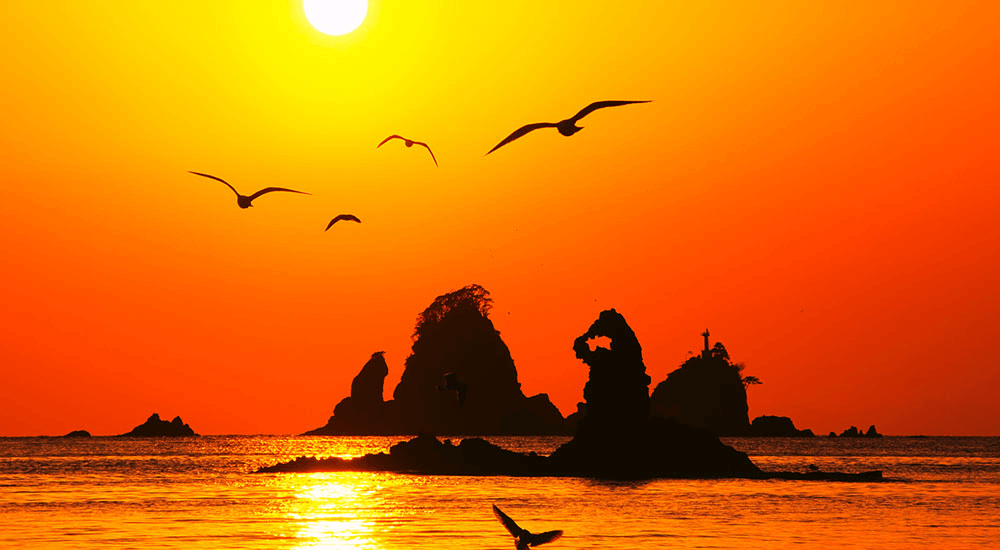
The most recognizable photographic element is the offshore rock formation called Meganeccho, also nicknamed “Godzilla Rock” in some tourism material. B-Izu specifically highlights the possibility of framing the setting sun in or around the rock shape.
Give yourself time. The composition changes as the sun moves, and arriving at the exact published sunset time is too late. The shoreline, rocks and foreground become easier to understand while there is still light.
2. Dogashima: the best all-round sunset stop
Dogashima is the easiest sunset recommendation for a first trip because you are likely to be there already. The coast gives you multiple layers — near cliffs, middle-distance islands and the open bay beyond — which creates depth even before the sky becomes dramatic.
Spend the afternoon on the cave cruise and coastal walk, then remain in the area rather than driving away before evening. If your accommodation is in Dogashima, this is also the least stressful option because you can finish the day close to the ryokan.
3. Koganezaki: where the rock turns gold
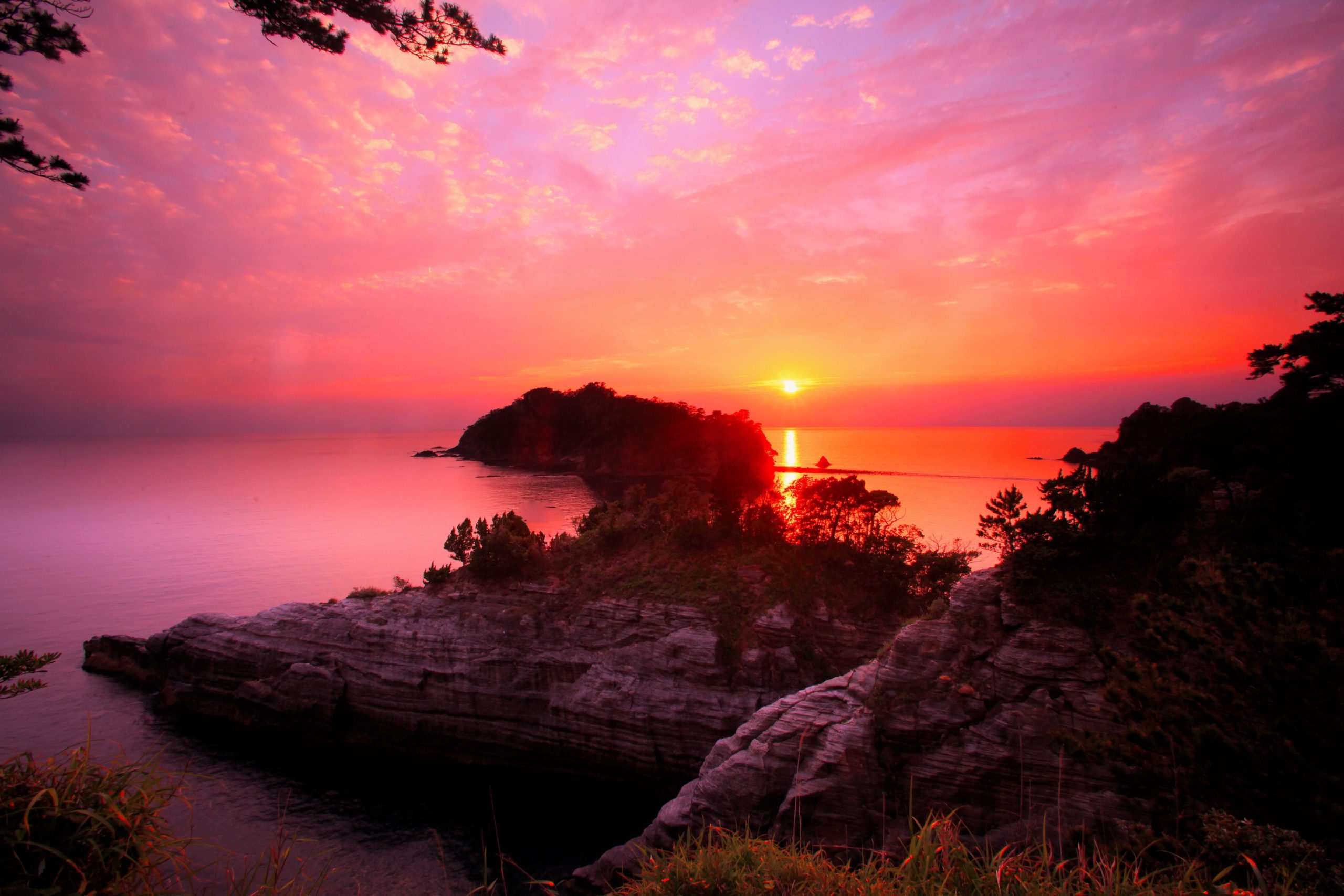
Koganezaki literally carries the idea of gold in its name, and the late light explains why. B-Izu describes the rock face around the distinctive “Horse Rock” as glowing gold at sunset. On clear days, Mt. Fuji can also appear across the broader view, adding a second focal point.
Koganezaki works especially well for photographers who prefer a wider landscape and for travelers combining a daytime beach or snorkeling stop with an evening viewpoint.
Two quieter alternatives: Arari Harbor and Sawada Park
Arari Harbor
Arari gives you a more local sunset: boats, harbor structures and a smaller community rather than a famous scenic platform. It is useful for repeat visitors or photographers who want something less obvious than the main three.
Sawada Park Open-Air Bath
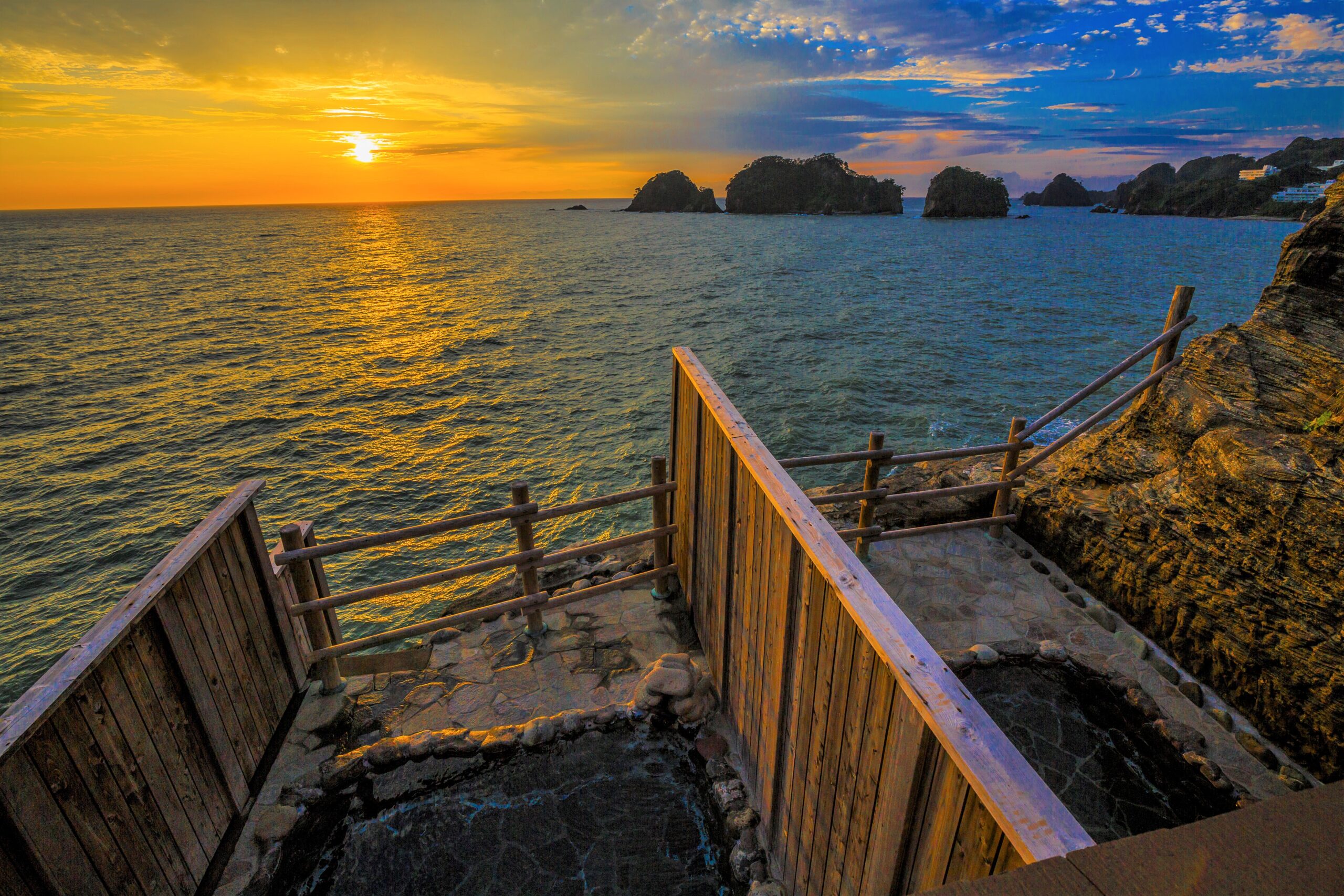
Sawada Park changes the sunset from something you watch into something you sit inside. The municipal open-air bath faces Suruga Bay from the cliff, and B-Izu specifically recommends it around sunset. Because it is a small public facility, current opening information and capacity should be checked rather than assumed.
What time should you arrive?
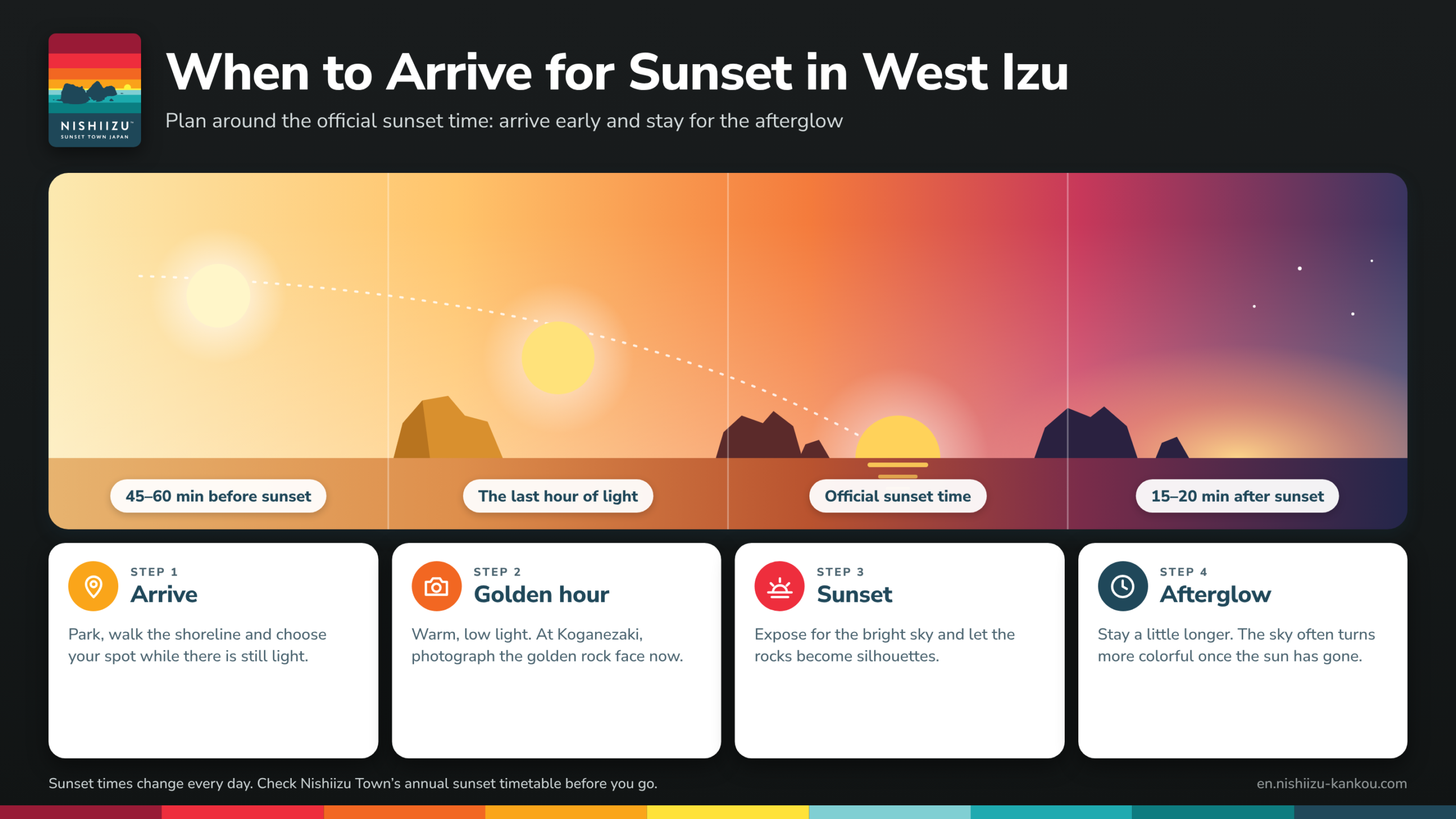
Arrive 45 to 60 minutes before the official sunset time. That gives you time to park, choose a composition and watch the golden light before the sun touches the horizon. Stay at least 15 to 20 minutes after sunset when possible. The sky can become more colorful after the sun disappears.
Nishiizu Town publishes an annual sunset timetable. Link to it prominently rather than hard-coding 365 times into the article. This is better for both user experience and content maintenance.
What is the best season for sunset in Nishiizu?
Sunset is year-round, but the experience changes. Cooler months often bring clearer air and earlier sunset times, which pair naturally with onsen and dinner. Summer gives you a later sunset after beach or water activity. Spring and autumn are comfortable for longer outdoor waits and photography.
Clouds are not always a problem. A completely clear sky can produce clean color, but partial cloud can create more texture and drama. The only reliable rule is to look west and decide whether the horizon is still open enough to be worth waiting.
Photography tips that improve the result
- Expose for the bright sky rather than the dark foreground if you want saturated color.
- Use the rock formations as silhouettes instead of trying to recover every shadow.
- At Otago, move your position as the sun shifts relative to Meganeccho.
- At Dogashima, use multiple island layers to create depth.
- At Koganezaki, shoot before sunset as well as at sunset to capture the golden rock face.
- Keep the horizon level and leave room for the afterglow.
Build the sunset into the itinerary
| Daytime plan | Best sunset finish | Why |
|---|---|---|
| Dogashima cave cruise + Tombolo | Dogashima | No extra travel; strong first-time day |
| Koganezaki beach / snorkeling | Koganezaki | Same landscape changes dramatically in late light |
| Tago food / cultural day | Otago | Short move into a dedicated sunset setting |
| Beach + relaxation | Sawada Park or ryokan view | Turns the evening into the recovery phase of the day |
Bottom line
If you only choose one sunset, choose the location that fits the rest of your trip. Otago is the dedicated photography choice, Dogashima is the best all-round first visit, and Koganezaki is the strongest golden-landscape option. The bigger strategic point is that Nishiizu should never market sunset as a background image alone. It is an experience worth planning the day around.
Read more articles:
Complete Dogashima travel guide