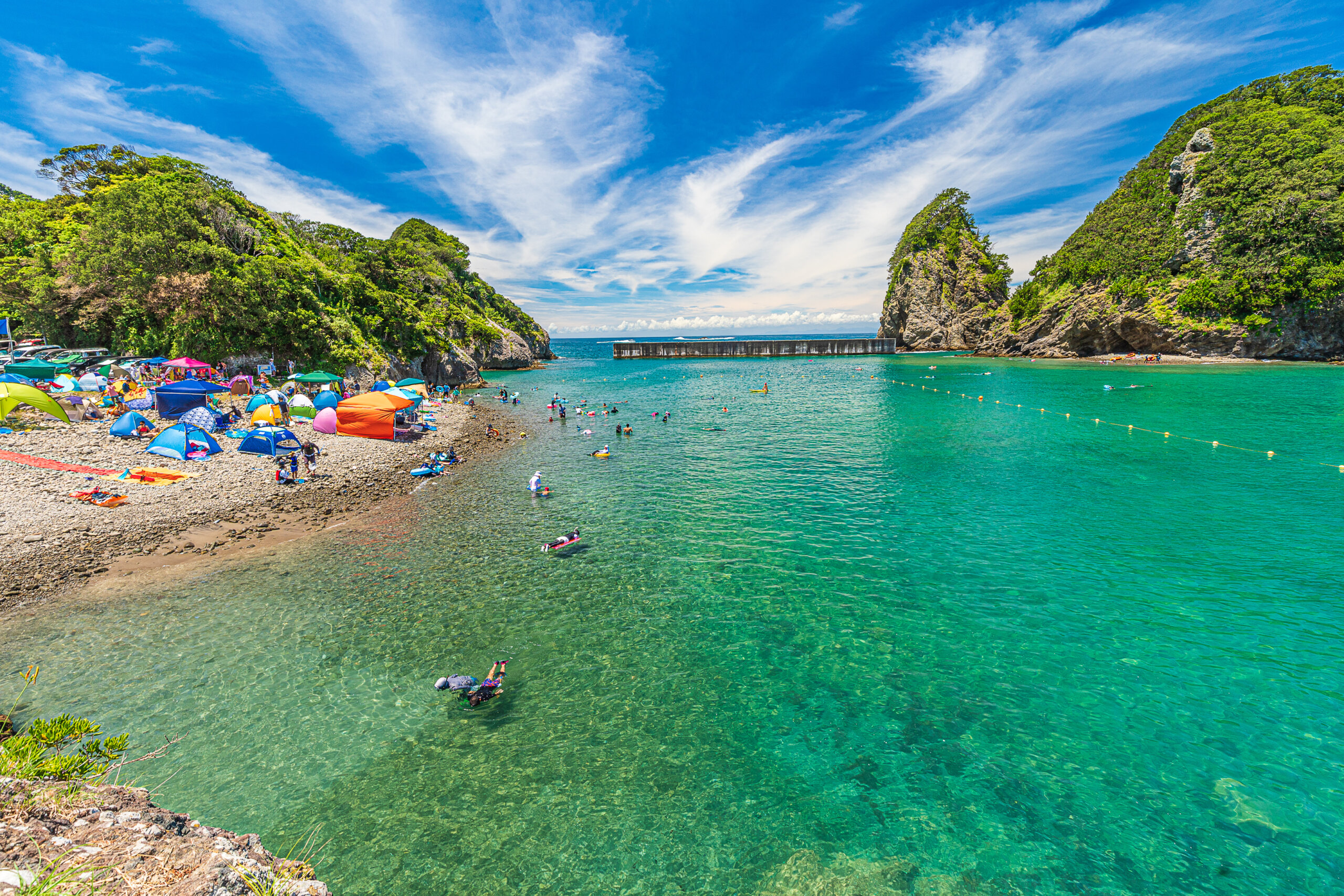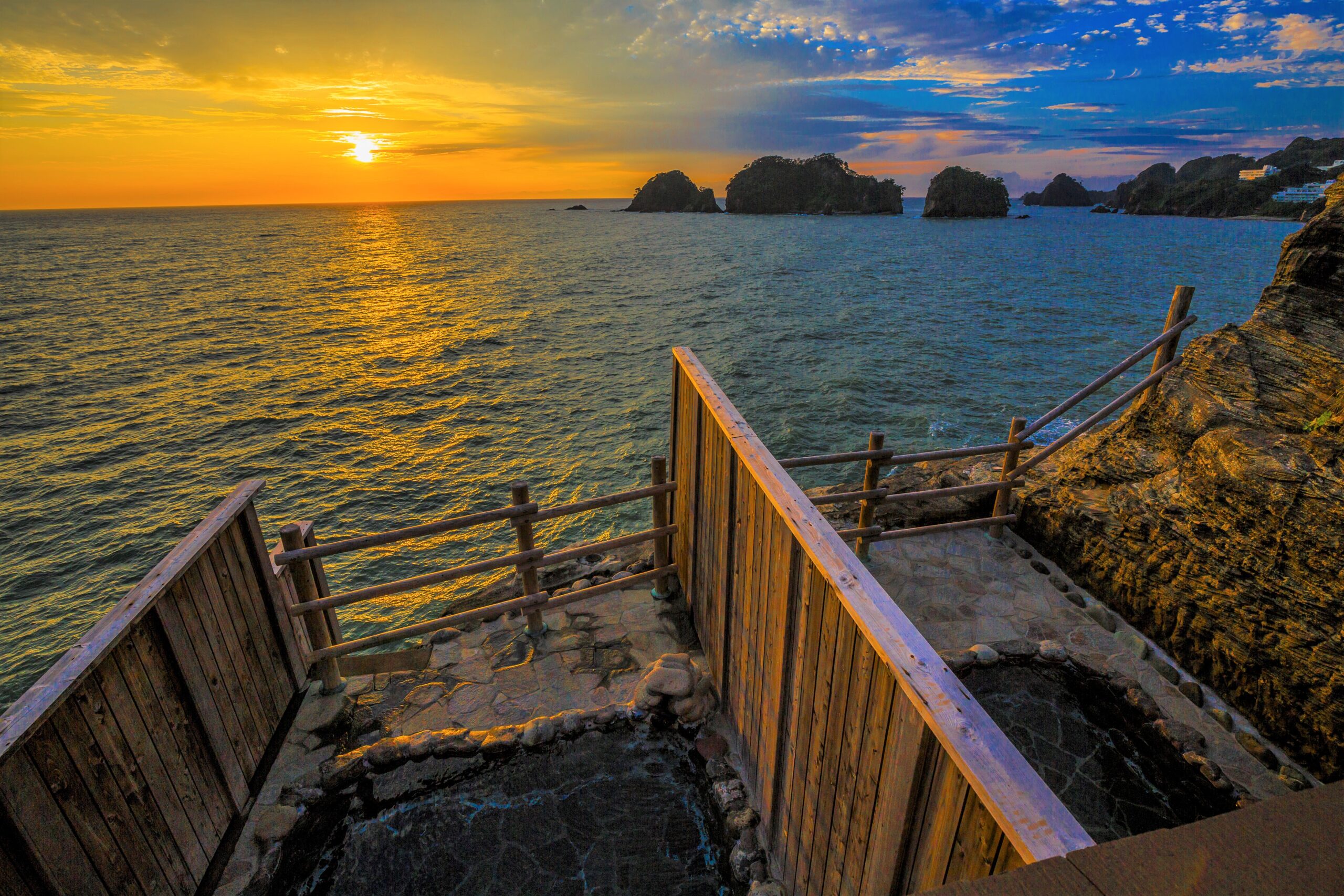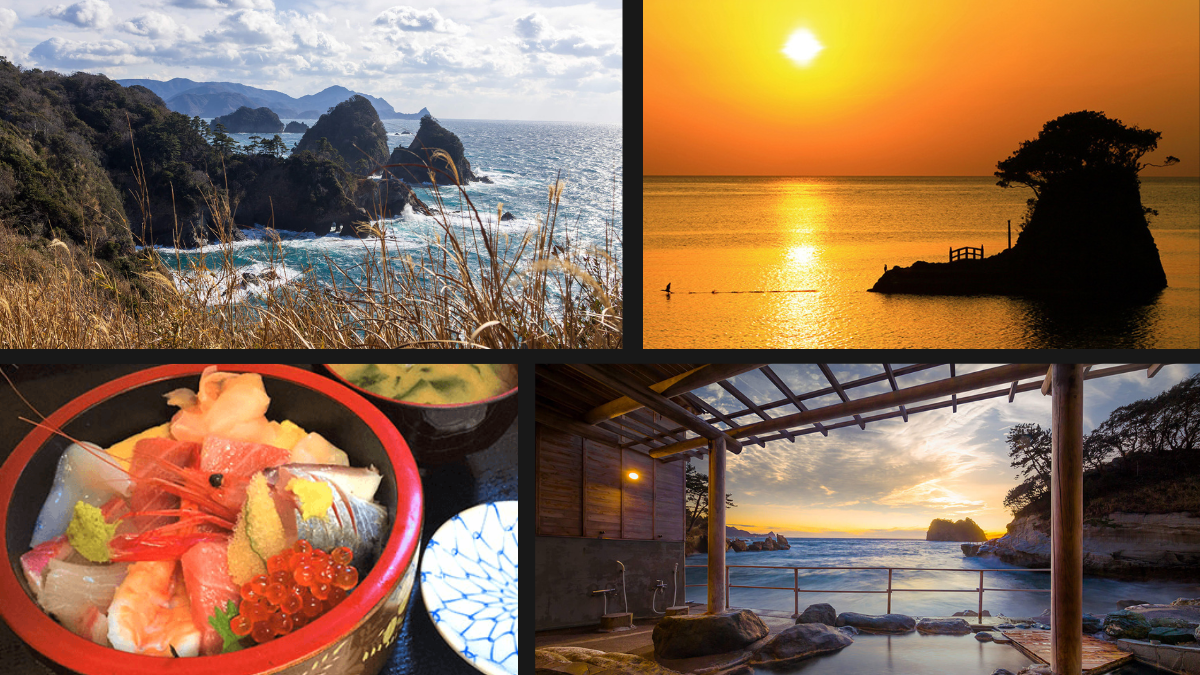
The biggest mistake in a two-day Izu Peninsula itinerary is trying to cover the entire peninsula. Izu is larger and slower to move around than it looks on a map. If your goal is West Izu, the better trip is to choose Nishiizu as the destination and let Dogashima, sunset, onsen and one additional experience carry the weekend.
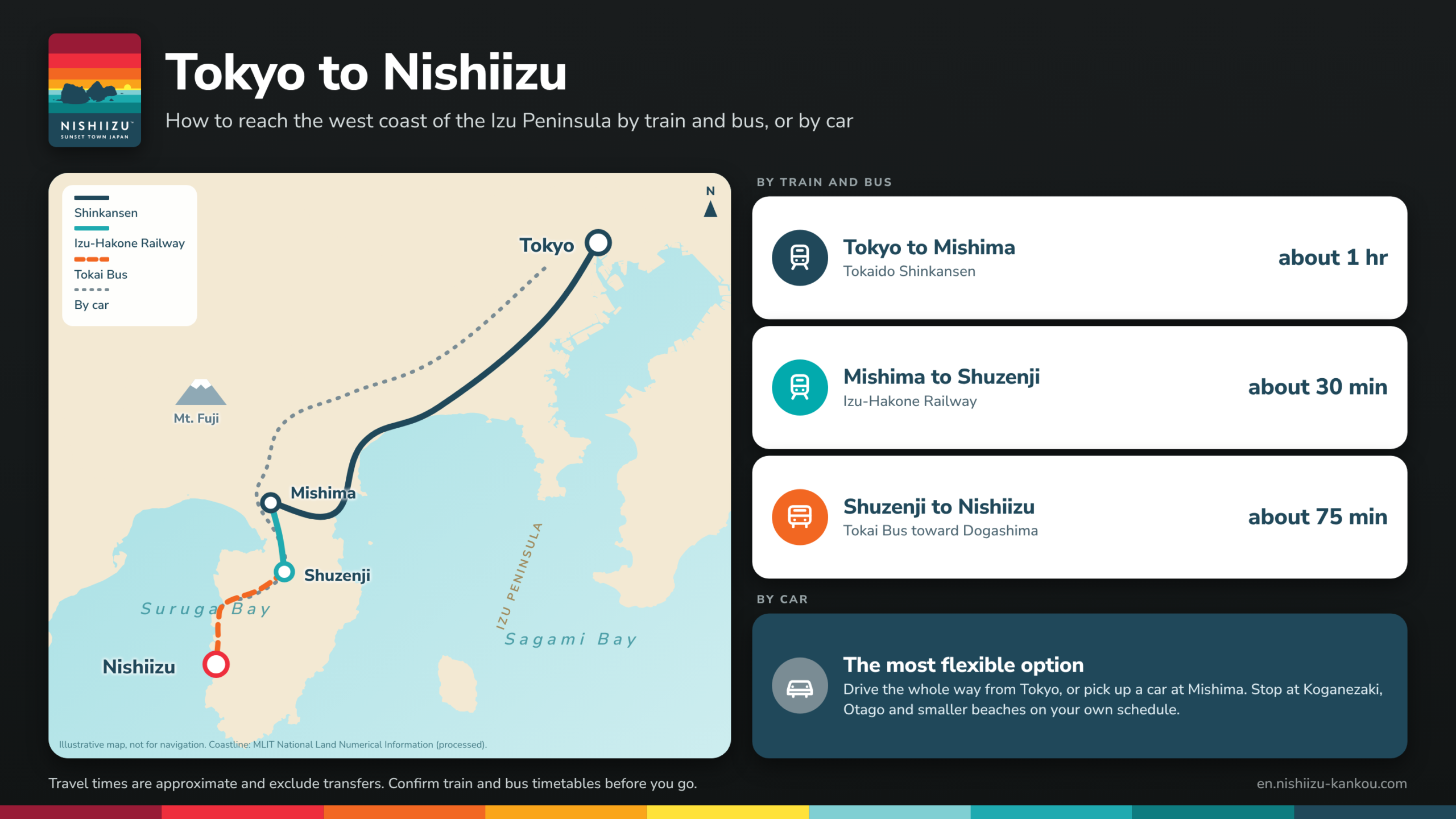
This route is designed for travelers starting in Tokyo. It works best with a car after Mishima or for the full trip, but a car-free version is included because Nishiizu is reachable by train and Tokai Bus.
2-day Nishiizu itinerary at a glance
| Day | Focus | Core Experience |
|---|---|---|
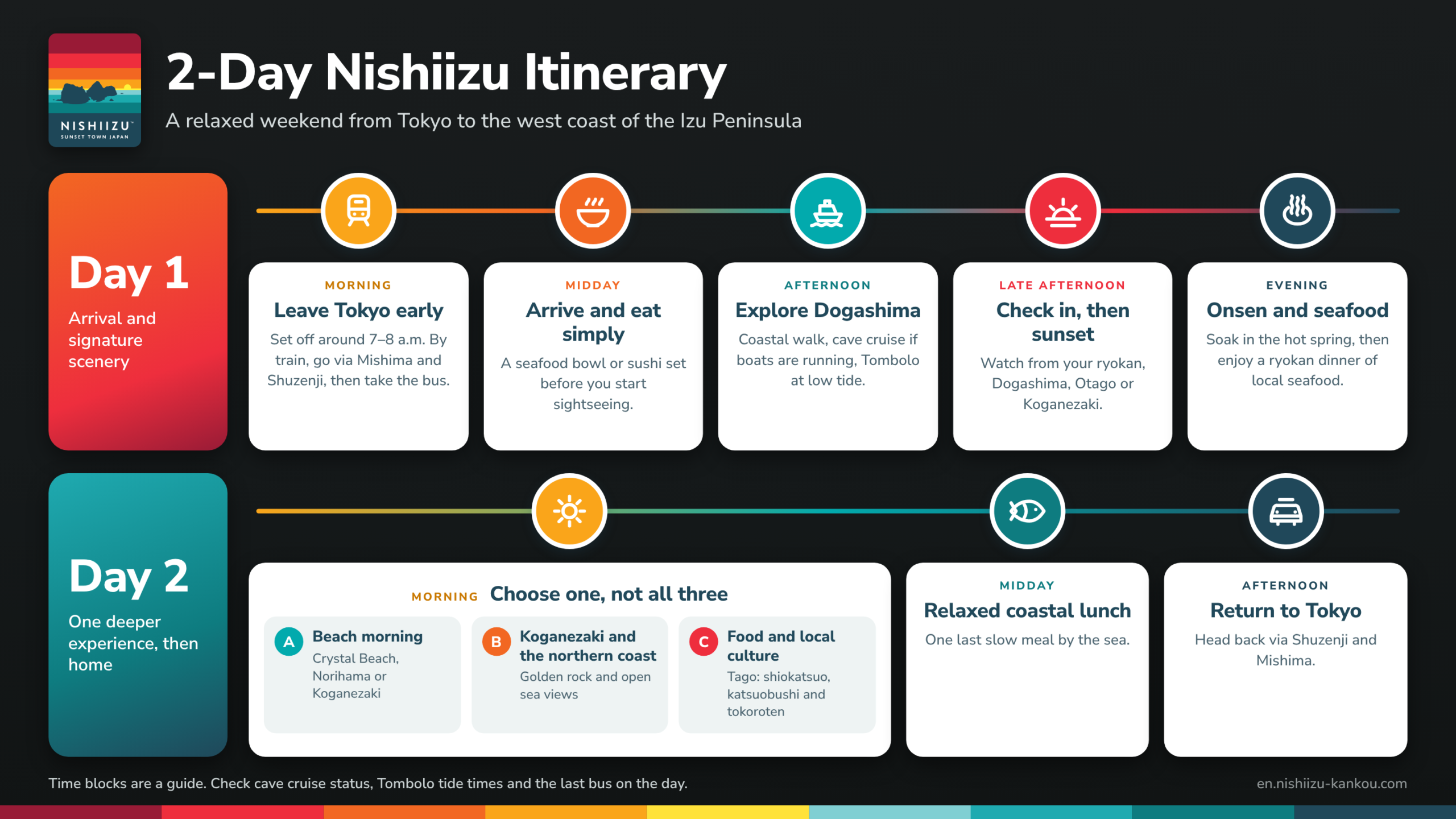
| 1 day | Arrival + signature scenery | Tokyo to Nishiizu, Dogashima, cave cruise if operating, coastal walk, sunset, onsen ryokan, seafood dinner |
| 2 days / 1 night | One deeper experience + return | Beach or Koganezaki, local food/culture, relaxed lunch, return toward Mishima/Tokyo |
Day 1: Tokyo to Dogashima, then slow down
Morning: leave Tokyo early enough to protect the afternoon
Aim to be moving by roughly 7:00–8:00 a.m. You do not need an exact departure in the article because train and bus schedules change; the principle is more important. Nishiizu is not the place to arrive at 3:30 p.m. and then discover that the one experience you cared about is weather-dependent or closing.
If you are driving, build in one short coffee or scenic stop rather than multiple attractions on the way. If you are taking the train, Mishima is the logical transfer point and Shuzenji is the gateway to the bus leg.
Late morning or early afternoon: arrive and eat simply
Have lunch before you begin sightseeing, but do not make the first meal the most elaborate meal of the trip. A seafood bowl, sushi set, local noodle dish or simple diner works well. Save the slower multi-course meal for the ryokan if your stay includes dinner.
Afternoon: make Dogashima the anchor
Dogashima is where the trip should become unmistakably West Izu. Start with the coastal area on foot, then take the cave excursion if boats are running. As of August 2026, Dogashima Marine lists the standard cave excursion at about 20 minutes. The operator updates same-day status because waves and weather can stop departures.
If the sea is too rough for the boat, do not treat the day as ruined. The land-based views, geological formations and nearby Tombolo area still give you a strong afternoon. If the tide is low enough for the Tombolo, follow the official tide information and keep the return window in mind.
Late afternoon: check in before sunset
This is where a relaxed itinerary beats an ambitious one. Check in early enough that you are not carrying luggage or looking for parking when the sky begins to change. Nishiizu is officially built around sunset as a destination asset, and the west-facing horizon is one of the best reasons to stay overnight.
If your accommodation has an ocean-facing bath or terrace, sunset can happen there. If not, choose a nearby viewing point such as Dogashima, Otago or Koganezaki depending on where you are staying and how much driving you want before dinner.
Evening: onsen and seafood
After sunset, stop moving. Soak, eat and let the day finish. A ryokan dinner is particularly well matched to Nishiizu because it turns local seafood into part of the destination experience rather than another restaurant search.
Day 2: choose one version of Nishiizu
Day two should be shaped around your travel style. Pick one of the following, not all of them.
| Traveler type | Morning choice | Why it works |
|---|---|---|
| Beach / water | Koganezaki, Tago-Sebama, Futo or another suitable beach | Clear water, snorkeling potential and a slower pace |
| Scenery / photography | Koganezaki + short coastal stops | Golden rock, geological scenery and open views |
| Food / culture | Tago + shiokatsuo/katsuobushi-related stop or local market | Connects seafood to the working culture of the coast |
| Relaxation | Late checkout + day-use onsen + coastal lunch | Best for couples and people who came to decompress |
| Family | Calmer beach + short Dogashima/Tombolo repeat if conditions fit | Keeps activity simple and flexible |
Option A: beach morning
In summer, choose a beach based on conditions and the group. Crystal Beach is long and shallow, Norihama is calm and close to Dogashima, and Koganezaki is better for travelers attracted to clear water, rock pools and snorkeling. Supervised periods vary by beach and year, so check current official status before swimming.
Option B: Koganezaki and the northern coast
Koganezaki gives you a different visual language from Dogashima. The cape is known for golden rock in late light and clear coastal water below. In a two-day trip, it works well as a shorter scenic stop before you begin the return journey.
Option C: food and local culture
If you already did enough scenery on day one, use the morning to understand what the coast produces. Tago is closely associated with shiokatsuo and katsuobushi traditions. Tokoroten, made from tengusa seaweed, is another useful link between the sea and local food culture. This is also the better choice in poor beach weather.
A realistic car-free version
Without a car, keep both days geographically tight. Base yourself around Dogashima or somewhere directly on the bus route. Day one can be Dogashima, the boat and sunset. Day two should be one bus-accessible stop or a slow morning near the accommodation rather than a chain of beaches.
The main rule is to check the last practical bus back before committing to a sunset location. Nishiizu rewards slowing down, but the bus will not wait for the sky.
What to do if the weather changes
Sea conditions are the main variable. If the cave cruise is suspended, switch to land-based Dogashima views, a local meal, glass-related activity, museum or onsen. If rain arrives on a beach morning, make food and culture the focus rather than spending the day waiting for the beach to improve.
Booking checklist
- Book accommodation before transport if sunset-facing rooms or private baths are important.
- Check Dogashima Marine operating status on the morning of your visit.
- Check the official Tombolo tide information if crossing is a priority.
- In summer, confirm the current supervised swimming dates for the beach you plan to use.
- For public transport, confirm the final return bus before sunset.
- If driving, allow extra time on weekends and holiday periods.
Bottom line
The best two-day Nishiizu itinerary is not the one with the most pins on a map. It is the one that protects the experiences West Izu does best: one dramatic coastline, one golden evening, one hot-spring night and one slower second-day choice. That is enough to make the trip feel complete.
Read more articles:
Complete Dogashima travel guide